For local drivers, the sudden appearance of a deer on the road is an all too common and frightening experience. An impact can happen in a split second, leaving you shaken and your vehicle seriously damaged. Understanding what to do next is crucial for your safety and for the proper restoration of your car. A deer collision is not just a minor fender bender; it often involves significant front-end damage that can affect everything from your vehicle’s cooling system to its complex structural components and advanced safety sensors. It is important to seek a professional evaluation from a trusted collision repair center. Our team is here to guide you through the entire process, from the initial damage assessment to navigating your insurance claim and performing expert repairs that return your vehicle to its pre-accident condition, ensuring both its safety and value are fully restored.
Choosing the right repair facility after a deer accident makes all the difference. Our commitment is to provide transparent, high-quality collision repair services that prioritize your safety. We combine state-of-the-art technology with certified technicians who understand the intricacies of modern vehicles. From perfectly matching your factory paint to recalibrating essential driver-assistance systems, we handle every detail with precision. Let us take the stress out of the situation and be your advocate, ensuring your vehicle receives the meticulous care it deserves. Learn more about our process below.
A collision with a deer is a jarring event that can leave you with many questions and concerns. The force of such an impact can cause a cascade of damage, much of which is not immediately visible. Understanding the steps to take and what to expect from the repair process can provide peace of mind and help you make informed decisions. This guide breaks down everything local drivers need to know, from the moment of impact to driving your fully restored vehicle home.
Your first priority is always safety. If you are involved in a collision with a deer, try to remain calm and follow these essential steps. First, pull your vehicle over to a safe location, away from traffic, and turn on your hazard lights. Before exiting the vehicle, check for oncoming traffic. Do not approach the deer; an injured animal can be dangerous. Once you are in a safe spot, call the local authorities to report the incident. A police report can be vital for your insurance claim, which you can learn more about by reading our guide on how the auto body insurance claims process works. Document the scene by taking photos of the damage to your vehicle, the surrounding area, and any injuries, if it is safe to do so.
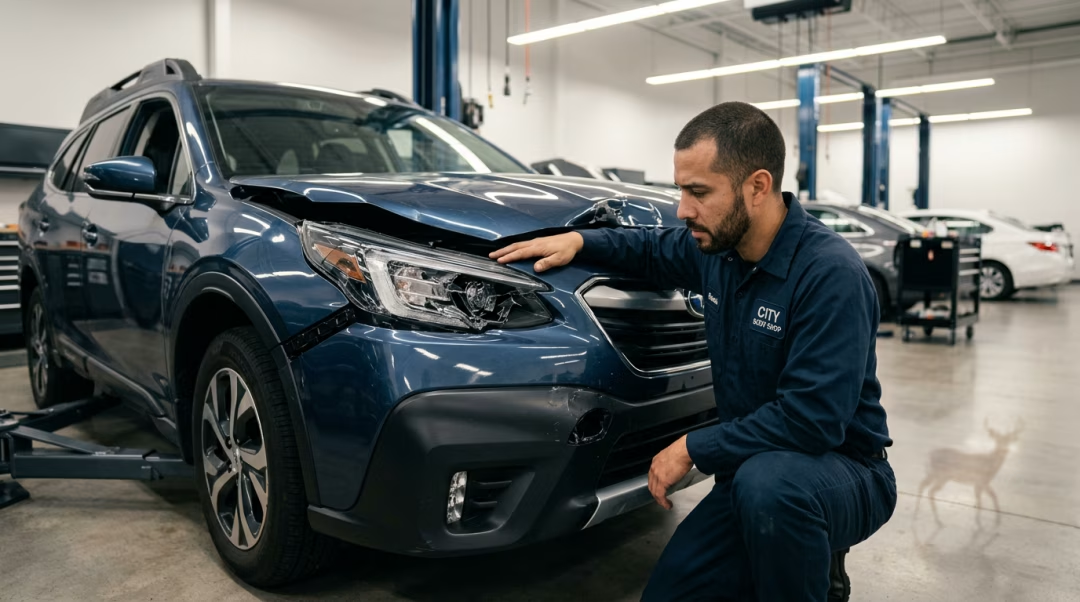
The visible damage from a deer collision, such as a dented hood, broken grille, or cracked headlight, is often just the beginning. The real concern is the potential for hidden and structural damage that can compromise your vehicle's safety and performance.
Because of this potential for widespread issues, it is essential to have your vehicle thoroughly inspected by a certified technician who knows what hidden damage looks like after a minor accident. We perform a comprehensive tear-down and analysis to create a complete blueprint for repair, ensuring no damage goes unaddressed.
Once your vehicle is at our facility, our team begins a meticulous repair process designed to restore its integrity, appearance, and function. We start with a detailed estimate and work directly with your insurance provider to streamline the claims process. After gaining approval, we carefully disassemble the damaged areas to confirm the full extent of the necessary repairs.
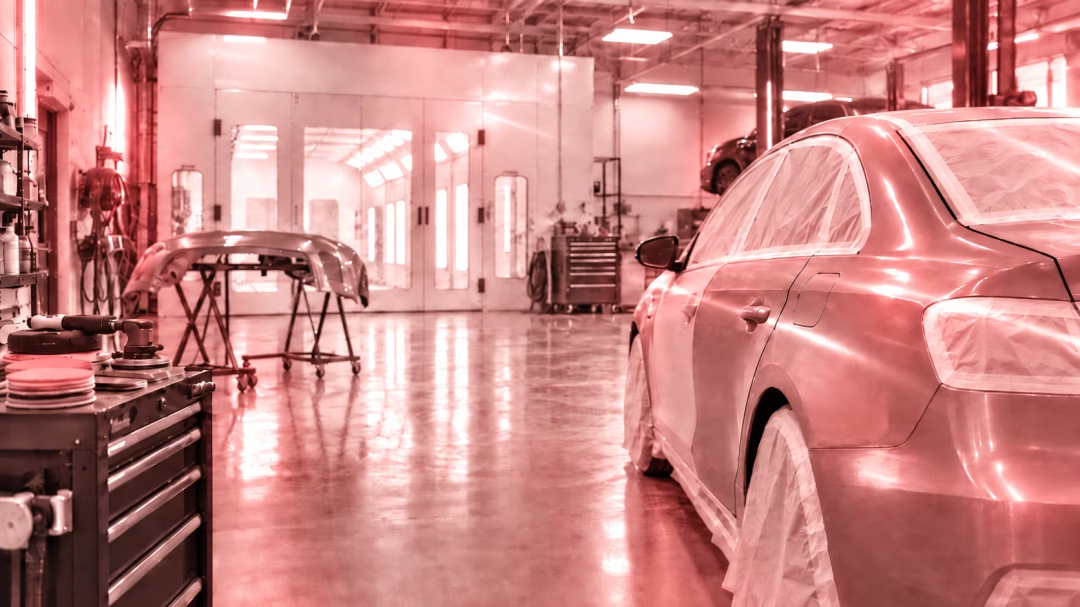
Our I-CAR certified technicians then perform all structural and body work, using precise tools to ensure everything aligns with factory specifications. For parts that need replacing, we often recommend Original Equipment Manufacturer (OEM) components to guarantee a perfect fit and function, which is a key reason why OEM parts matter in collision repair. Next, our paint department takes over. Using advanced color matching technology, we mix a formula that perfectly corresponds to your vehicle's factory paint code. The new panels are prepped, primed, painted, and sealed with a durable clear coat for a flawless, long-lasting finish. Finally, your vehicle is carefully reassembled, and all systems, especially ADAS features, are recalibrated. A final quality control inspection ensures that the repair meets our high standards before the vehicle is detailed and returned to you.
Your first priority is safety. Pull over to a safe location, turn on your hazard lights, and stay in your vehicle if you are on a busy road. Call the police to file a report, which is crucial for your insurance claim. Do not approach the animal. Once it is safe, take photos of the vehicle damage and the scene for your records.
In most cases, yes, provided you have comprehensive coverage on your auto insurance policy. Unlike a collision with another vehicle, hitting an animal typically falls under a comprehensive claim. This means it usually does not count as an at-fault accident and may not raise your premiums. We can help you navigate the specifics of your insurance claim.
A vehicle is declared a total loss when the cost to repair it exceeds a certain percentage of its actual cash value (ACV), a threshold determined by your insurance company. Deer collisions can cause extensive hidden damage to the frame, engine, and safety systems. Our technicians perform a thorough inspection to provide an accurate estimate, which helps the insurance adjuster make the final determination.
The repair timeline varies significantly based on the severity of the damage and parts availability. A minor repair might take a few days, while extensive structural work could take several weeks. We provide a detailed timeline after our initial inspection and keep you updated throughout the process. For more information, you can read our guide on how long collision repair typically takes.
Absolutely. We use a computerized paint-matching system that analyzes your vehicle's existing paint and provides an exact formula. Our skilled technicians then use blending techniques to ensure a seamless transition between the original and new paint, making the repair completely invisible. This attention to detail is critical for protecting your vehicle's resale value.