After the stress of a vehicle collision, one of the first questions on every driver's mind is, "How long will I be without my car?" The time it takes for collision repair can vary significantly, ranging from just a few days to several weeks. The honest answer depends on a combination of factors, including the extent of the damage, the availability of necessary parts, and the responsiveness of your insurance provider. Minor cosmetic issues like a dented bumper might be resolved quickly, while extensive structural work requires a much more detailed and lengthy process. Understanding each phase, from the initial estimate to the final quality inspection, is key to setting realistic expectations. Our goal is to demystify this timeline for you, providing a clear roadmap of what happens behind the scenes. We want you to feel informed and confident as your vehicle is restored to its pre-accident condition by our expert team.
Navigating the auto body repair journey requires patience, as each step is crucial for ensuring a safe and high-quality outcome. The timeline is not just about the hands-on repair work; it also involves detailed administrative processes like insurance approvals and parts procurement, which can add time. Choosing a reputable repair facility that communicates transparently is your best strategy. They will keep you updated on progress, explain any unexpected delays, and ensure every detail, from frame alignment to paint matching, is handled with precision and care.
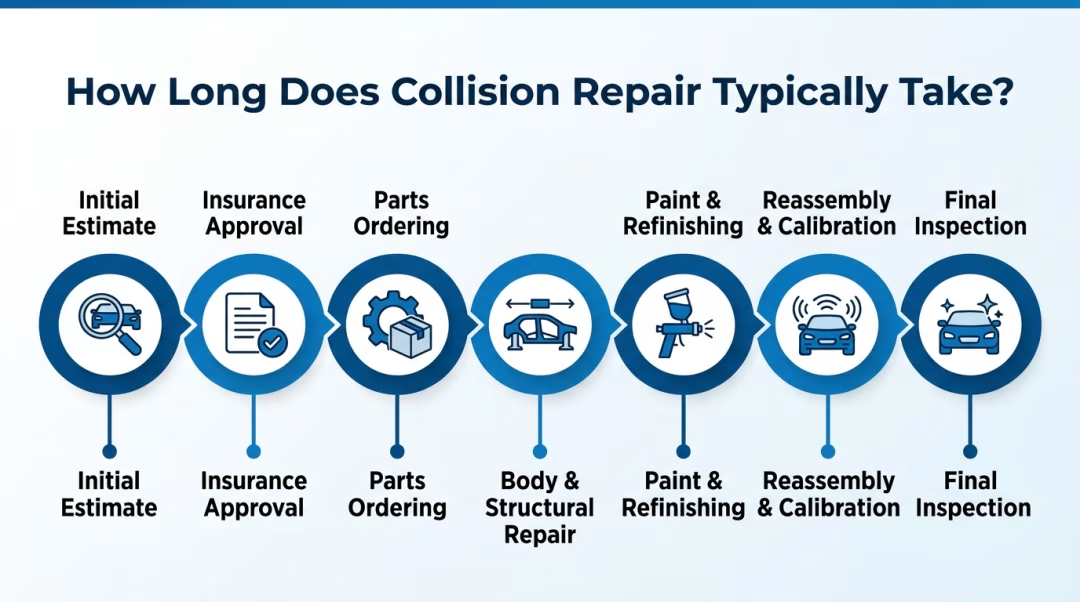
Understanding what happens after you drop your vehicle off for repairs can significantly ease the anxiety of waiting. The process is a carefully orchestrated sequence of events, and a delay in one stage can impact the entire timeline. Here is a comprehensive look at each step involved in a typical collision repair job.
The journey begins the moment you bring your vehicle to the shop. A trained estimator performs a thorough visual inspection to assess the visible damage. They will document everything from dented panels and broken lights to paint scratches. This initial evaluation is used to create a preliminary repair estimate for you and your insurance company. This step is critical for understanding the scope of the work ahead. For a deeper look into this process, learn about what happens during a collision repair estimate. It is important to remember this is just a starting point; often, more damage is discovered later.
Once the initial estimate is written, it must be submitted to the responsible insurance company for approval. An insurance adjuster may review the shop's estimate, compare it to their assessment, and authorize the repairs. The speed of this phase depends entirely on the insurance company's internal processes. Delays here are common but are outside the control of the repair shop. We recommend familiarizing yourself with how the auto body insurance claims process works to better navigate this step.
With insurance approval secured, the shop can order all the necessary parts. The timeline here can be affected by supply chain availability, whether Original Equipment Manufacturer (OEM) or aftermarket parts are used, and the vehicle's make and model. While waiting for parts to arrive, technicians will begin the disassembly, or "teardown," process. This involves carefully removing damaged components to uncover any hidden damage that was not visible during the initial inspection. If new damage is found, a supplemental estimate is created and sent to the insurance company for another round of approval, which can add to the total repair time.
This is where the heavy lifting happens. If the vehicle's frame or unibody structure was compromised, it will be mounted on specialized equipment for precise straightening. Technicians use advanced tools to pull the frame back to its exact factory specifications, which is vital for the vehicle's safety and alignment. Once the structure is sound, the team moves on to repairing or replacing exterior body panels like doors, fenders, and quarter panels. This stage requires immense skill to ensure all panels align perfectly for a seamless finish.
After body repairs are complete, the vehicle moves to the paint department. This is a multi-step process that begins with extensive preparation. New panels are prepped, sanded, and primed to create a smooth surface. Our paint technicians then use sophisticated color-matching technology to mix a batch of paint that perfectly matches your vehicle's factory color. The paint is applied in a controlled, dust-free paint booth, followed by multiple layers of clear coat to protect the finish and provide a glossy shine. The vehicle is then baked to cure the new paint properly.
Once the paint is fully cured, the vehicle returns to the body shop for reassembly. Technicians carefully reinstall all the components that were removed, such as lights, bumpers, trim, and interior panels. In modern vehicles, this stage also involves a critical final step: recalibrating the Advanced Driver-Assistance Systems (ADAS). Any repair that involves a bumper, windshield, or side mirror can affect the sensors and cameras that control features like adaptive cruise control and lane-keeping assist. Properly learning how sensors and cameras are recalibrated is essential for restoring your vehicle's safety features.
Before we call you to pick up your vehicle, it undergoes a rigorous quality control inspection. A manager or lead technician will review every aspect of the repair to ensure it meets our high standards for safety and appearance. They check for panel alignment, paint finish, and system functionality. Finally, the vehicle is thoroughly cleaned inside and out, so it looks its best when you arrive. A final test drive is often performed to confirm everything is working as it should.
While every case is unique, here are some general timelines you can expect for common types of collision damage:
Initial estimates are based only on visible damage. Once technicians disassemble the vehicle, they often find hidden issues like a bent frame support or a cracked radiator mount. This discovery requires a supplemental claim to be filed with your insurance company. The time it takes for the insurer to approve the additional work and for new parts to be ordered is the most common reason for repair delays.
Rental car coverage is an optional part of most auto insurance policies. It is best to check your specific policy details to see if you have this coverage and what the daily limits are. If the other driver was at fault, their insurance company should cover the cost of a rental. You can learn more about how rental car coverage works on our detailed information page.
Modern automotive paint cures quickly, but it is still wise to be gentle with it for the first few weeks. We recommend waiting at least 30 days before applying wax or polish. As for washing, it is safe to do so after a few days, but you should only use a mild car soap and avoid high-pressure car washes. For detailed instructions, please see our guide on how to wash a freshly painted vehicle safely.
A vehicle is declared a total loss when the estimated cost of repairs plus its salvage value exceeds its actual cash value (ACV) before the accident. Each state and insurance company has a specific threshold for this calculation. If your vehicle is totaled, the insurance company will pay you the ACV, and they will then take possession of the vehicle. Find out more by reading what happens if your insurance totals your car.
Yes, absolutely. A reputable collision repair shop will always stand behind its work. We offer a comprehensive warranty covering all the bodywork and paint refinishing performed on your vehicle for as long as you own it. A quality warranty provides peace of mind and is a sign of a shop that is confident in its craftsmanship. We encourage you to ask about what warranty coverage a body shop should offer when comparing your options.