Dealing with the aftermath of a vehicle collision can be a stressful and confusing experience. Beyond the initial shock, you are faced with a series of steps that can feel overwhelming. This is where understanding how the auto body insurance claims process works becomes your most valuable tool. Navigating this path does not have to be difficult. From the moment you report the incident to the final inspection of your beautifully restored vehicle, there is a clear and structured process to follow. Knowing what to expect at each stage, from dealing with adjusters to understanding repair estimates, empowers you to make informed decisions. It transforms a complicated situation into a manageable one, ensuring your vehicle receives the quality care it deserves and you get back on the road with confidence. Our team is here to help guide you through every step, providing clarity and support when you need it most.
Once you have filed your claim, one of the most critical decisions you will make is choosing where to have your vehicle repaired. While your insurance provider may recommend a shop from their network, it is important to remember that you have the right to choose a collision center you trust. A reputable and certified auto body shop will not only perform high quality repairs but will also act as your advocate, communicating directly with the insurance adjuster to ensure all necessary work is approved. Learn more about how to choose a collision repair shop that prioritizes your safety and satisfaction.
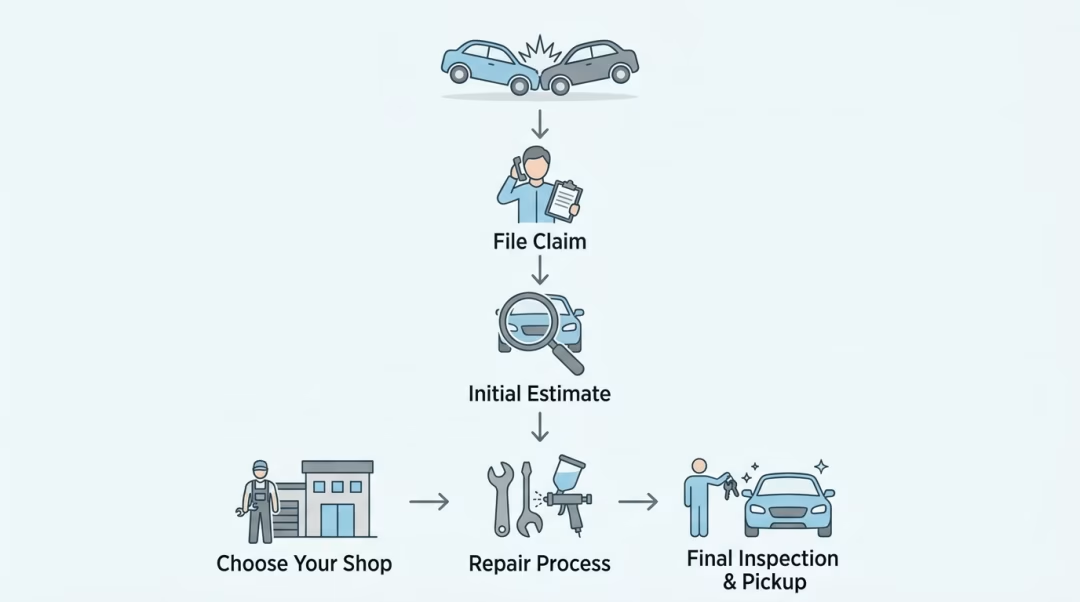
The journey from a damaged vehicle to a fully restored one involves several key phases. Each step is designed to document the damage, determine the cost of repairs, and ensure the work is completed to the highest safety and quality standards. Below, we break down the entire auto body insurance claims process into manageable steps so you know exactly what to anticipate.
What you do in the first few moments after an accident can significantly impact the smoothness of your claim. Your first priority is always safety.
For a more detailed checklist, review our guide on what to do immediately after a fender bender in Kentucky.
Once you are safely away from the scene, it is time to officially start the claims process. You should contact your insurance company as soon as possible to report the accident. Be prepared to provide all the information you gathered at the scene. Your insurer will assign you a claim number and an adjuster to handle your case. They will explain your coverage, including your deductible and any rental car provisions. You can find more information about the documentation you need for an auto body insurance claim on our blog.
Next, an insurance adjuster will need to inspect your vehicle to create an initial estimate. This can happen at your home, workplace, or a designated inspection center. It is important to understand that this first estimate is often just a starting point. It is based only on visible damage, and the true extent of the damage may not be known until a professional technician disassembles the affected areas at a body shop. You can learn more about what happens during a collision repair estimate to prepare.
Your insurance company may suggest a shop from their Direct Repair Program (DRP). While these shops can offer a streamlined process, you are never obligated to use them. The law protects your right to choose your own body shop. Selecting a facility with certified technicians and a commitment to quality, like ours, ensures your vehicle is repaired correctly and safely. A high quality shop will perform its own detailed inspection, often identifying hidden damage the initial adjuster missed. When this occurs, the shop will submit a supplement to the insurance company. A supplement is an additional request for parts and labor needed to complete the repair properly. This is a normal and critical part of the process, which we explain further in our article about what is supplemental damage in an insurance claim.
With the repair plan approved, our expert technicians get to work. The process is meticulous and follows a precise order to restore your vehicle's integrity and appearance.
Once the repairs are complete, the final payment process begins. The insurance company will typically pay the repair shop directly for the covered amount. You will be responsible for paying your deductible to the shop at the time of pickup. Before you leave, it is essential to conduct a thorough review of the work. We encourage a final walkthrough and a post-repair inspection to ensure you are completely satisfied with the results. If your vehicle was deemed a total loss, the process is different; the insurance company will pay you the actual cash value of the car, minus your deductible. Learn more about what happens if your insurance totals your car.
Yes, absolutely. While your insurance provider may recommend a shop from their network, state laws protect your right to have your vehicle repaired at the facility of your choice. Choosing a shop you trust is crucial for ensuring a quality and safe repair.
A supplement is an additional estimate submitted to the insurance company after the initial appraisal. It covers hidden damage or additional parts and labor discovered only after a technician has disassembled the vehicle. This is a standard and necessary part of the collision repair process.
Whether your rates increase depends on several factors, including your insurance provider's policies, your driving record, and who was at fault for the accident. If the other driver was at fault, your rates are less likely to be affected. It is best to discuss this possibility with your insurance agent directly.
OEM (Original Equipment Manufacturer) parts are made by your vehicle's manufacturer and are identical to the parts your car was built with. Aftermarket parts are produced by other companies. While some are high quality, others may not fit or perform as well. We explain why OEM parts matter in collision repair for ensuring the safety, fit, and finish of your vehicle.
This is a very common situation. Insurance adjusters often write initial estimates based only on visible damage. A professional body shop performs a more thorough inspection. Your chosen shop should handle this by submitting a supplement directly to the insurer with documentation to justify the additional costs for a complete and safe repair.
The timeline can vary significantly based on the complexity of the claim, the extent of the damage, parts availability, and the insurance company's response time. A minor repair might take a few days, while extensive structural work could take several weeks. A good body shop will provide you with an estimated timeline and keep you updated throughout the process.