A minor accident, often called a fender bender, can feel like a simple inconvenience. The bumper might have a scuff, or a small dent might appear on a door panel. Many drivers exchange information and assume the damage is purely cosmetic. However, what you see on the surface is often just the tip of the iceberg. Modern vehicles are engineered with complex crumple zones, sensitive electronics, and precise structural components that can be compromised even in a low-speed impact. This unseen damage can affect your vehicle’s safety, performance, and long-term reliability. Understanding what to look for beneath the surface is crucial, whether you are repairing your current vehicle or inspecting a used car for your next purchase. Ignoring these potential issues can lead to expensive repairs down the road and, more importantly, put you at risk. This guide will help you identify the subtle signs of significant hidden damage.
While a visual inspection can reveal some clues, the most reliable way to uncover hidden issues is through a comprehensive evaluation by a trained professional. Before you purchase a pre-owned vehicle, especially one with any accident history, a thorough inspection is your best defense against future problems. It provides peace of mind and ensures the vehicle you are driving is safe and structurally sound. Explore our extensive inventory of carefully inspected vehicles, or learn more about us and our commitment to quality and transparency.
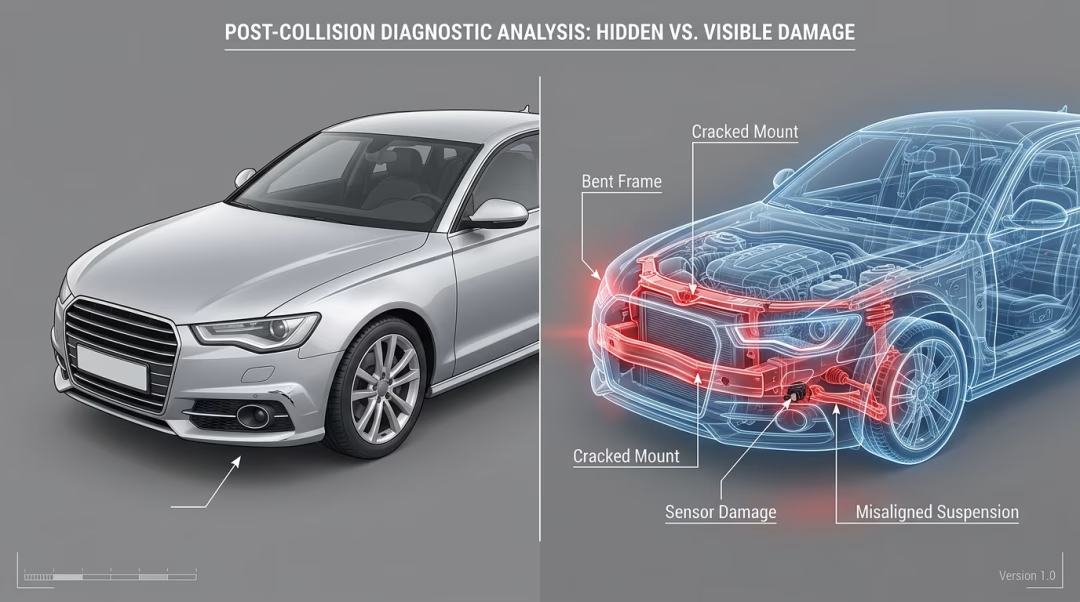
That small dent in the bumper or minor scratch on the quarter panel may seem insignificant, but the forces involved in a collision, even at just five miles per hour, can travel through the entire vehicle. These forces can bend, crack, and misalign critical components that are completely hidden from view. Identifying this damage is key to ensuring a vehicle is safe to drive and retains its value. Below, we explore the most common types of hidden damage that can result from a seemingly minor accident.
The single most critical type of hidden damage involves the vehicle's frame or unibody structure. This is the skeleton of your car, responsible for maintaining its shape, protecting occupants, and serving as the mounting point for the suspension and drivetrain. Most modern cars use a unibody design where the frame and body are a single piece. While this is great for weight and rigidity, it also means impact energy can be transferred far from the point of contact.
A minor hit to a front corner can subtly twist the entire front unibody structure. You will not see this with a casual glance, but the symptoms will appear. For more detailed information, read our guide on the signs your vehicle needs structural frame repair. Here is what to look for:
Frame damage is serious because it compromises the vehicle's crumple zones, which are designed to absorb energy in a future crash. A poorly repaired frame can make a vehicle unpredictable and unsafe in another collision.
Hitting a curb, a deep pothole, or getting bumped in the wheel area can wreak havoc on your suspension and steering systems. These components are designed with very tight tolerances, and even a slight bend in a control arm, tie rod, or strut can lead to major problems. The most common symptom is a vehicle that pulls to one side while driving on a straight road. This often points to an alignment issue, but a simple alignment might not fix it if a component is bent. Understanding what causes alignment issues after a collision is crucial. Other signs include:
Modern cars are packed with technology, and a minor impact can damage these delicate systems. The plastic bumper cover you see is just a facade; behind it lies a metal reinforcement bar, foam absorbers, and numerous sensors for parking assistance, cruise control, and collision avoidance systems.
A small bump can crack the radiator or AC condenser, which might not leak immediately but could fail weeks later. Wiring harnesses can be pinched or stretched, causing intermittent electrical faults that are notoriously difficult to diagnose. Even the battery can be damaged if the tray it sits on is bent. After any accident, it is important to check that all electronic systems are functioning correctly. If you notice a new warning light or a feature that no longer works, it is likely related to the impact. These repairs often require recalibration, and it is important to know how sensors and cameras are recalibrated for safety.
When inspecting a used car, one of the biggest challenges is spotting a previous repair that was done cheaply. The goal of a bad repair is to look good just long enough to sell the car. A fresh coat of paint can hide a multitude of sins, from excessive body filler to underlying rust. Learning how to spot quality paint work is a valuable skill. Here are some giveaways of a poor cosmetic repair:
Absolutely. Even a low-speed collision, particularly one that impacts a corner of the vehicle or the wheels directly, can transfer enough force to bend or twist the unibody structure. Because the frame is the foundation of the car's safety and alignment, any suspected damage should be professionally evaluated immediately.
No, it does not. A clean CarFax or AutoCheck report is a good starting point, but it is not a guarantee. These reports only show what has been officially reported. If a previous owner paid for a repair out of pocket to avoid an insurance claim, the accident will not appear on the vehicle's history, making a professional inspection essential.
The easiest method is to check for consistency. Look at panel gaps on both sides of the car to ensure they are even. Open and close all doors, the hood, and the trunk to see if they operate smoothly. Look for mismatched paint under bright light and check for signs of overspray on plastic trim. These simple checks can often reveal signs of a past repair.
In some ways, yes. Modern vehicles are filled with sensitive electronics, sensors, and cameras that are often located in or behind the bumpers and grille. These systems are easily damaged in a minor impact and can be very expensive to repair and recalibrate. Older, simpler cars had fewer of these fragile components in impact-prone areas.
If your car pulls to one side, has a vibrating or crooked steering wheel, or makes new noises, the impact likely damaged a suspension or steering component. This could be anything from a bent wheel rim or tie rod to a damaged control arm. This affects not only your driving comfort but also your safety and tire longevity, so it should be addressed promptly.