For any business owner or fleet manager, a box truck or cargo van is a vital asset. However, one of the most common and costly areas of damage on these workhorses is the roof. Unlike a standard car, the height and construction of commercial vehicles make their roofs uniquely vulnerable to a specific set of problems. The most frequent cause is impact from low-clearance obstacles like bridges, parking garage ceilings, and even low-hanging tree branches. Beyond sudden impacts, gradual environmental factors such as prolonged sun exposure, heavy snow, and hail can degrade materials and compromise seals over time. Simple wear and tear, like failing seam sealants or stress from constant vibration, can also lead to leaks and structural weakness. Understanding these common causes is the first step in properly inspecting a used commercial vehicle and ensuring you are making a sound investment for your business.
Knowing what to look for can save you from unexpected repair bills and downtime. A compromised roof can lead to water damage, ruined cargo, and even safety issues. Whether you are maintaining your current fleet or searching our inventory for your next reliable work vehicle, a thorough roof inspection is non-negotiable. This knowledge empowers you to identify quality used vans and trucks, ask the right questions, and ultimately choose a vehicle that is ready to work as hard as you do from day one.
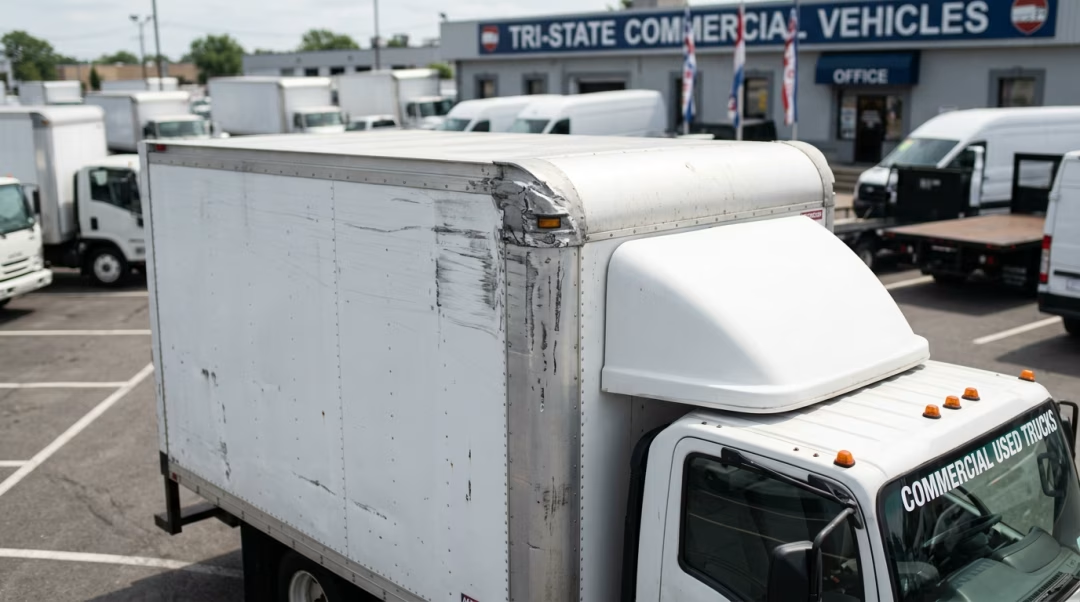
The roof of a commercial vehicle is its first line of defense against the elements, protecting valuable cargo and the structural integrity of the entire vehicle. Damage can range from minor cosmetic blemishes to severe structural failures that render the vehicle unsafe. Below, we explore the primary categories of damage in detail, providing insights that are crucial for any current or prospective owner of a commercial van or truck.
Physical impacts are the most dramatic and often most severe cause of roof damage. Due to their height, box trucks and high-roof vans are constantly at risk of colliding with overhead objects that standard vehicles easily clear.
Over time, Mother Nature can be just as damaging as a physical collision. The constant exposure to the elements slowly breaks down roofing materials, leading to failures that can sneak up on an owner.
Like any other part of a vehicle, a roof requires maintenance. Neglecting it or performing improper repairs can lead to significant problems down the road. These issues are especially important to check for when buying a used commercial vehicle.
Absolutely. What starts as a small drip can lead to widespread issues. Water can saturate insulation, promote the growth of mold and mildew which creates health hazards, and rust out the roof bows and structural supports from the inside out. It can also cause significant damage to any cargo being transported and can even lead to electrical shorts in dome lights or other wiring.
Both have distinct advantages. Translucent fiberglass roofs are popular because they allow natural light into the cargo area, reducing the need for interior lighting. However, they can become brittle and crack with age and UV exposure. Aluminum roofs are very durable and resistant to punctures, but they are constructed of multiple panels, meaning they have seams that can potentially leak if not maintained properly.
The cost varies dramatically based on the extent of the damage and the roof material. A simple seam resealing might cost a few hundred dollars. Repairing a small puncture or crack could be several hundred to over a thousand. A full roof panel replacement on a box truck, especially after a major low-clearance impact, can easily cost several thousand dollars, involving significant labor and materials.
A repair addresses localized damage. This involves patching a hole, sealing a cracked seam, or fixing a specific dent. A full replacement is necessary when the damage is widespread, such as after a rollover, or when the main structural components like roof bows are compromised. It involves removing the entire roof skin and often the supporting framework, which is a much more intensive and expensive process.
Yes, every vehicle in our inventory undergoes a rigorous inspection process. Our technicians are trained to spot the signs of current and past roof damage, from fresh sealant to hidden water stains inside. We believe in transparency and want our customers to be fully confident in the quality and reliability of their purchase. You can learn more about our commitment to quality by visiting our about-us page.