When you get your vehicle back after a collision repair, you expect it to look and feel new again. One of the most obvious signs of a substandard repair job is the presence of uneven or wide panel gaps. These unsightly spaces between your hood, fenders, doors, and trunk are more than just a cosmetic flaw. They are a clear indicator that something went wrong during the repair process. Poorly aligned panels can suggest deeper issues, such as unaddressed structural damage, the use of ill-fitting aftermarket parts, or simply a lack of precision and care from the technician. Understanding the root causes of these gaps is crucial, as they can significantly impact not only your vehicle's appearance but also its long-term durability, safety, and resale value. A quality repair should restore your vehicle to its pre-accident condition, with every body line matching perfectly.
Identifying the reason behind poor panel alignment is the first step toward understanding the quality of work performed on your car. These issues almost always trace back to foundational mistakes, from failing to properly straighten the vehicle's frame to cutting corners with cheap, non-original parts. A vehicle with inconsistent gaps is a warning sign that the repair was likely rushed or handled by an inexperienced technician. Below, we explore the specific technical failures that lead to these problems and what you can do to avoid them.
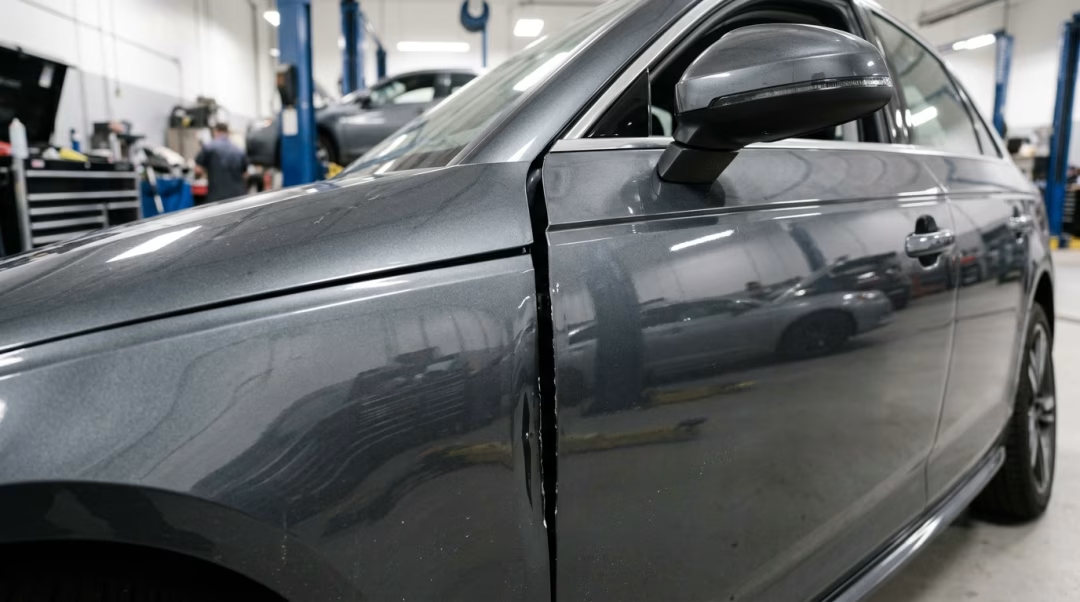
Perfectly aligned body panels are a hallmark of factory quality and expert repair work. The seams and gaps between different sections of your car are engineered with incredible precision, typically measuring just a few millimeters wide. When a vehicle leaves the assembly line, these gaps are uniform across the entire body. After an accident, the primary goal of any reputable collision center is to restore that factory precision. However, when the job is not done correctly, the result is misaligned panels. This is not a minor imperfection; it is a signal of a flawed repair. Let us break down the most common technical reasons why this happens.
The single most significant cause of panel gaps is uncorrected damage to the vehicle's underlying structure. Modern cars are built on a unibody frame, which is a single, integrated skeleton that provides structural support. During a collision, this frame can be bent, twisted, or compressed, even in what seems like a minor impact. If a body shop does not use sophisticated, computer-guided laser measuring systems to identify and perfectly straighten this damage, nothing else will fit correctly. Attempting to bolt a new fender or door onto a bent frame is like trying to put a straight puzzle piece into a warped puzzle. No amount of adjustment will make it fit flush. This is why addressing signs your vehicle needs structural frame repair is the absolute first step in a quality collision repair process.
Another major contributor to panel fitment issues is the use of non-OEM (Original Equipment Manufacturer) parts. To save costs, some repair shops or insurance policies may specify the use of aftermarket or imitation parts. While some high-quality aftermarket parts exist, many are produced using reverse-engineering techniques that do not match the exact specifications of the original. These parts can have subtle differences in shape, thickness, and mounting point locations. As a result, a technician may have to bend, drill, or force a part into place, inevitably creating uneven gaps. OEM parts are manufactured by the same company that built your vehicle, guaranteeing a perfect fit every time. This is a key reason why OEM parts matter in collision repair for achieving a seamless, factory-finish look.
Even with a straight frame and OEM parts, poor technique can ruin the final result. Aligning body panels is a meticulous art that requires patience and skill. A quality technician will "test fit" all new panels before any paintwork begins. This involves temporarily mounting the doors, fenders, and hood to make fine adjustments and ensure every line is perfect. A rushed technician might skip this crucial step, painting the parts first and only discovering the fitment issues during final assembly. At that point, they may be reluctant to fix the problem correctly because it would require redoing the paint. Furthermore, improper torque on bolts, incorrect use of shims, or failure to align adjacent panels can all contribute to a sloppy finish. Choosing the right facility is critical, and knowing how to choose a collision repair shop in Crittenden, KY, can make all the difference.
While the visual aspect of panel gaps is what owners first notice, the functional consequences can be far more serious. A poorly aligned door may not seal correctly, leading to excessive wind noise on the highway and allowing water to leak into the cabin, potentially causing rust or electrical issues. A hood that does not sit flush could rattle at speed or, in a worst-case scenario, fail to latch securely. Most importantly, many modern safety systems rely on sensors embedded within body panels, such as bumpers and side mirrors. If these panels are misaligned, the sensors may not function as intended, compromising features like blind-spot detection and parking assist. Ultimately, poor panel alignment is a major red flag that drastically reduces your vehicle's resale value, as any savvy buyer or inspector will spot it immediately. A proper repair helps protect your vehicle's resale value by avoiding these telltale signs of damage history.
Yes, panel gaps can almost always be corrected, but it requires a thorough diagnosis by a skilled technician. The process often involves loosening or removing the affected panels to identify the root cause, which could be a simple alignment issue or something more complex like hidden frame damage. The vehicle may need to be put back on a frame machine to confirm its specifications are correct before panels are properly refitted and aligned. It is often a labor-intensive process that underscores the importance of getting the repair done right the first time.
Not all aftermarket parts are created equal, but there is a significant variation in quality. Some are certified by organizations like CAPA (Certified Automotive Parts Association) and may offer a near-OEM fit. However, many non-certified, cheaper aftermarket parts are notorious for poor fitment. For a guaranteed perfect match that preserves your vehicle's integrity and value, OEM parts are always the superior choice. Using high-quality components is a key part of how collision repair shops restore vehicle safety systems correctly.
Typically, no. Your auto insurance policy covers the cost of repairing damage from a specific incident. If the repair shop you or your insurer chose performed substandard work, correcting their mistakes is generally not covered under a new claim. The responsibility falls on the repair shop's workmanship warranty. This is why it is essential to choose a reputable shop that stands behind their work with a lifetime guarantee.
To ensure a quality repair, do your research. Look for a shop with certifications from vehicle manufacturers or industry groups like I-CAR. Read online reviews and testimonials. Ask about their warranty policy—a reputable shop will offer a lifetime warranty on their workmanship. You can also inquire if they use OEM parts and have modern equipment, such as a laser frame measuring system. Knowing what certifications a collision repair shop should have is a great starting point.
Even a small, inconsistent gap can be a sign of a bigger problem. It might be a simple adjustment issue, or it could be the only visible symptom of hidden damage to mounting brackets or the underlying frame. On modern vehicles with tight tolerances, any deviation from the factory standard warrants a closer look by a professional to ensure the repair was completed to the highest standard of safety and quality.