A sudden hailstorm can leave a vehicle owner feeling overwhelmed, as the once-smooth surfaces of their car are now covered in unsightly dings and dents. Understanding how this type of weather damage is professionally evaluated and fixed is the first step toward restoring your vehicle. The assessment process is far more detailed than a quick glance; it involves specialized lighting to reveal every single impression, meticulous counting, and measuring each dent to categorize its severity. Technicians must also identify the material of the damaged panels, as steel and aluminum require different repair approaches. This initial inspection is crucial because it dictates the most effective and cost-efficient repair strategy, whether that is the innovative paintless dent repair (PDR) method or more traditional bodywork. Knowing what to expect can demystify the process and give you confidence in the path to getting your car back to its pre-storm condition.
Once the full extent of the hail damage is documented, our focus shifts to the restoration itself. The goal is not just to remove the dents but to do so in a way that preserves the integrity and value of your vehicle. The chosen repair method depends entirely on the assessment, from the precision of PDR that keeps your original paint job intact to the expert application of conventional repairs for more severe impacts. Trusting this process to certified professionals ensures every dent is addressed and your vehicle’s safety and appearance are fully restored.
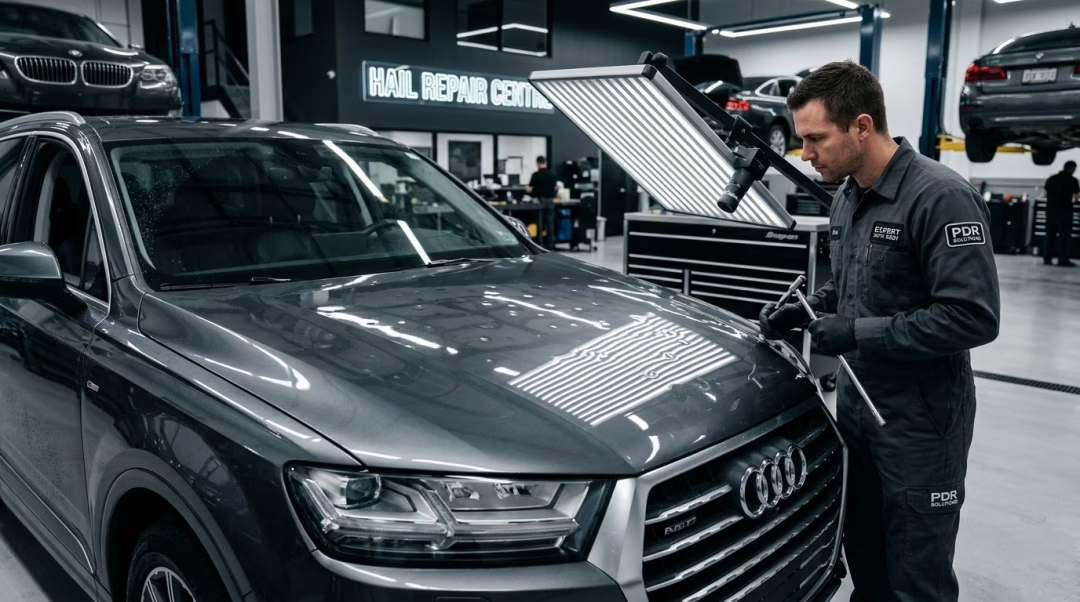
When your vehicle is caught in a hailstorm, the resulting damage can range from a few minor dings to extensive, crater-like dents across every horizontal panel. The journey from a damaged car to a fully restored one begins with a comprehensive and precise assessment. This is not a casual walk-around; it is a technical inspection performed by a trained estimator who understands the nuances of auto body work.
The assessment process is the foundation for a successful repair. An inaccurate evaluation can lead to incomplete repairs or an underestimated insurance claim. Here is what a professional assessment involves:
For the vast majority of hail damage cases, Paintless Dent Repair (PDR) is the preferred method of repair. It is a highly skilled technique that restores the panel to its original shape without compromising the factory paint finish.
The PDR process involves a technician gaining access to the backside of the damaged panel. This may require the careful removal of headliners, inner door panels, or hood insulators. Using a variety of specially designed metal rods and picks, the technician applies slow, precise pressure to the backside of the dent. They meticulously massage the metal back into its original position. The reflection from their PDR light board guides their every move, ensuring the panel is perfectly smooth without any high or low spots. The benefits of this method are significant, making it the industry standard for hail repair. You can explore the topic further on our page about what is paintless dent repair and when it works best.
While PDR is incredibly effective, it has its limitations. In certain situations, a conventional repair approach is the only way to guarantee a proper restoration. These scenarios include:
In these cases, the repair involves sanding the damaged area, applying a thin layer of body filler to restore the shape, priming, and then meticulously painting and clear-coating the area. Expert technicians use advanced auto paint color matching technology to ensure the new paint blends seamlessly with the existing finish.
In the most severe hailstorms, where hailstones are exceptionally large, the damage can be so extensive that repair is not a viable option. If a panel has hundreds of deep dents, or if the metal is severely stretched and warped, replacing the entire panel is the most effective solution. This is most common for hoods and trunk lids. While it is a more intensive repair, using high-quality or OEM parts ensures a perfect fit and a return to factory specifications. This approach guarantees the structural integrity and aesthetic quality of the vehicle. The entire insurance claims process can feel daunting, but understanding the steps helps. Learn more about how the auto body insurance claims process works on our site.
The timeline for hail damage repair varies widely based on the severity. Light damage treatable with PDR on a few panels might take 1-3 days. Widespread, severe damage requiring a combination of PDR, conventional repairs, and panel replacement could take one to two weeks or longer, especially if parts need to be ordered.
Generally, no. Hail damage falls under the comprehensive portion of your auto insurance policy, which covers damage from events outside of your control, often called "acts of God." Unlike collision claims, comprehensive claims typically do not result in an increase in your insurance premiums.
While PDR is effective for a majority of hail dents, it is not a universal solution. The viability of PDR depends on the size and depth of the dent, its location on the panel, and whether the paint surface is intact. Very large dents or those on sharp body lines may require conventional repair methods.
Hail damage repair on a vehicle with a wrap or coating requires extra steps. A vinyl wrap must be removed before repairs can be made and then replaced afterward. A ceramic coating may need to be polished off in the repair areas and reapplied after the dents are removed. These steps will be factored into the repair estimate and insurance claim.
When hail damage is repaired correctly using high-quality methods like PDR, the vehicle's value is largely preserved because the original factory paint is maintained. A poor repair, however, can negatively impact value. This is why choosing a reputable repair facility is so important to protect your investment and resale value.