Repairing a commercial work truck after a collision involves a far more detailed process than fixing a standard passenger car. For a body shop, the primary focus shifts from simple aesthetics to restoring rugged functionality and ensuring the vehicle can safely return to demanding job sites. Technicians look beyond the visible dents and scratches, performing a deep analysis of the vehicle's core systems. The inspection begins with the frame, as the entire structural integrity of a work truck depends on its straightness and strength. They also assess specialized components unique to commercial vehicles, such as utility beds, liftgates, and ladder racks, which must be perfectly aligned and functional to be safe. Materials are another key consideration; work trucks often use higher-strength steel and reinforced panels that require specific repair techniques. The ultimate goal is to minimize downtime and return a durable, reliable asset to your business, not just a vehicle that looks good.
A professional body shop understands that a work truck is a vital business tool. That is why their evaluation process is so meticulous. Every repair decision is made with the vehicle's future performance and resale value in mind. From verifying the integrity of critical welds to ensuring all electronic systems and upfitted equipment are properly calibrated, no detail is overlooked. This comprehensive approach guarantees the truck is not only visually restored but is also structurally sound and ready to handle the toughest jobs, protecting your investment and your team.
When a work truck enters a body shop, the repair process starts long before any tools are picked up. Unlike sedans or SUVs, these vehicles are complex machines built for specific, demanding tasks. A superficial fix is not an option. Professional technicians conduct a multi-point inspection that covers every aspect of the vehicle's structure and function. This ensures that hidden damage is uncovered and that the final repair is durable, safe, and compliant with industry standards. The evaluation is a systematic process designed to restore the truck to its pre-accident condition, ready to get back to work without compromising safety or performance. Let's explore the critical areas a body shop focuses on during the repair process.
The foundation of any work truck is its frame. Most commercial trucks are built using a body-on-frame construction, which provides superior strength and load-bearing capacity compared to the unibody design found in most modern cars. When a collision occurs, even a seemingly minor one, the force can be transferred directly to this frame. A top-tier body shop will immediately check for signs of bending, twisting, or cracking.
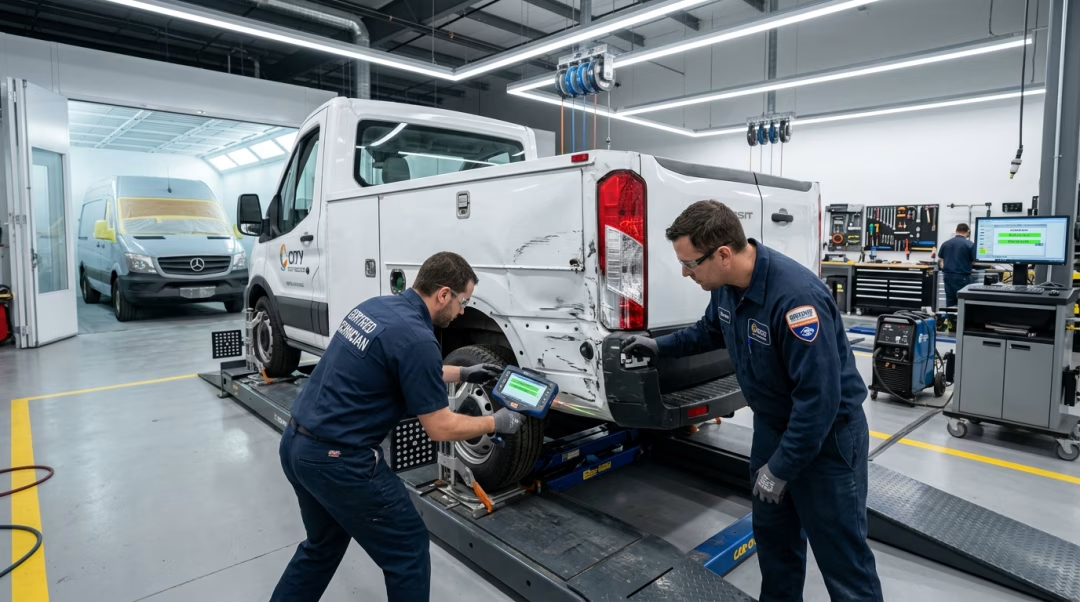
Technicians use computerized measuring systems to compare the truck's frame dimensions against factory specifications. This technology can detect deviations as small as a millimeter, which could otherwise lead to significant problems. If damage is found, a process known as frame straightening is performed using hydraulic machines that carefully pull the frame back into its precise alignment. They also inspect all cross-members, mounting points for the suspension and cab, and factory welds to ensure there are no stress fractures. Ignoring even minor frame issues can cause uneven tire wear, poor handling, and premature failure of other components. You can learn more about signs your vehicle needs structural frame repair on our blog.
An impact can easily damage components far from the point of collision. The force of a rear-end or side impact can travel through the frame and into the drivetrain and suspension. A body shop's inspection includes a thorough look at these critical systems. They will check the driveshaft for any bends or dents, which can cause vibrations and damage the transmission. Axle housings are inspected for cracks or bends, and suspension components like leaf springs, shocks, and control arms are examined for any signs of damage.
Misalignment is a common consequence of a collision, and it can affect more than just the steering. A misaligned suspension can put undue stress on the entire chassis and lead to unsafe driving conditions. This is why understanding how collision repair differs from general auto repair is so important; it is about restoring the entire vehicle system, not just the body panels.
Work trucks are often equipped with service bodies, utility beds, flatbeds, or custom storage solutions. These are not standard body panels; they are functional pieces of equipment that must be repaired with precision. A body shop will assess the condition of these specialized units, looking for misaligned doors, damaged locking mechanisms, and structural cracks. They also need to understand the different materials used, from heavy-gauge steel to lightweight aluminum and composites, each requiring specific welding and finishing techniques.
Beyond the bed, technicians examine all upfitted equipment. This includes:
Repairing these components correctly is crucial for job site safety and efficiency. A bent ladder rack or a malfunctioning liftgate is not just an inconvenience; it is a liability. Business owners needing to handle fleet vehicle damage rely on shops that understand these complexities.
The paint on a work truck serves a greater purpose than just appearance; it is the first line of defense against rust and corrosion. Body shops pay special attention to preparing surfaces and applying durable, industrial-grade coatings that can withstand harsh weather and job site abuse. Proper prep work is essential, as any leftover contaminants can cause the paint to fail prematurely. Shops use advanced color-matching technology to ensure repairs blend seamlessly with the existing paint, which is especially important for fleet vehicles that need to maintain a consistent brand image. After the paint is applied and cured, technicians often apply undercoating and other protective layers to wheel wells and the chassis to prevent future issues, particularly from winter road salt which can accelerate rust on body panels.
Modern work trucks are equipped with a growing number of Advanced Driver-Assistance Systems (ADAS), including backup cameras, blind-spot monitoring, and lane-keeping assist. The sensors for these systems are often located in bumpers, mirrors, and grilles—the very parts that are frequently damaged in a collision. After a repair, it is absolutely essential that these systems are recalibrated. A body shop will follow manufacturer procedures to ensure every sensor and camera is aimed correctly and functioning as intended. Skipping this step can lead to malfunctioning safety systems, creating a significant risk on the road. Proper recalibration of sensors and cameras is a non-negotiable part of a quality work truck repair.
Work truck repairs often cost more due to several factors. The vehicles use larger, heavier-duty parts and specialized materials like high-strength steel that are more expensive to source and require specific techniques to repair. Additionally, the labor is more intensive, as technicians must inspect and repair complex upfitted equipment like liftgates and utility beds, which are not present on standard cars.
Yes, in many cases, a bent frame on a heavy-duty truck can be safely repaired. Body shops use advanced computerized measuring systems and powerful hydraulic frame straightening machines to pull the frame back to its exact factory specifications. As long as the metal has not been stretched beyond its tolerance or cracked, a professional repair can restore the vehicle's structural integrity completely.
After a collision, technicians conduct a full functional test of all specialized equipment. For a liftgate, this involves checking the hydraulic system for leaks, testing the electrical wiring and switches, and ensuring the platform operates smoothly and aligns correctly with the truck bed. The mounting points are also inspected to confirm they were not compromised during the impact.
Work trucks are typically finished with highly durable, industrial-grade paints. These are often urethane-based coatings that offer superior resistance to chipping, fading, and chemical exposure compared to standard automotive paints. The focus is on long-term protection and durability rather than just a high-gloss aesthetic finish, ensuring the truck can withstand the harsh conditions of a job site.
The decision to repair or replace a utility bed depends on the extent and type of damage. Minor to moderate dents, cracks, and alignment issues can often be repaired cost-effectively. However, if the damage is severe and has compromised the core structure of the bed, or if multiple compartments and locking mechanisms are destroyed, replacement is often the safer and more practical option to ensure full functionality and safety.