Fender damage, from a minor parking lot ding to a more significant collision impact, is one of the most common types of auto body issues drivers face. Your vehicle's fenders are crucial panels that frame the wheel wells, protecting the engine compartment from road debris and contributing to the car's aerodynamic profile and structural integrity. Understanding how this damage is repaired can demystify the process and give you confidence when you bring your car to a body shop. The repair method depends entirely on the severity of the damage, ranging from simple paintless dent removal for small dings to complete panel replacement for extensive harm. A professional assessment is the first step toward restoring your vehicle's appearance and safety. Our team of expert technicians evaluates every aspect of the damage to determine the most effective and efficient repair plan, ensuring a seamless result that brings your car back to its pre-accident condition.
Choosing professional fender repair is an investment in your vehicle's future. A proper repair not only restores the cosmetic appeal of your car but also ensures its structural integrity and safety systems are not compromised. Professional technicians use specialized tools and techniques to match your vehicle's factory finish, which is crucial for maintaining its resale value. Attempting a DIY repair can often lead to bigger issues, such as mismatched paint or improper panel alignment. Learn more about why OEM parts matter in our detailed guide.
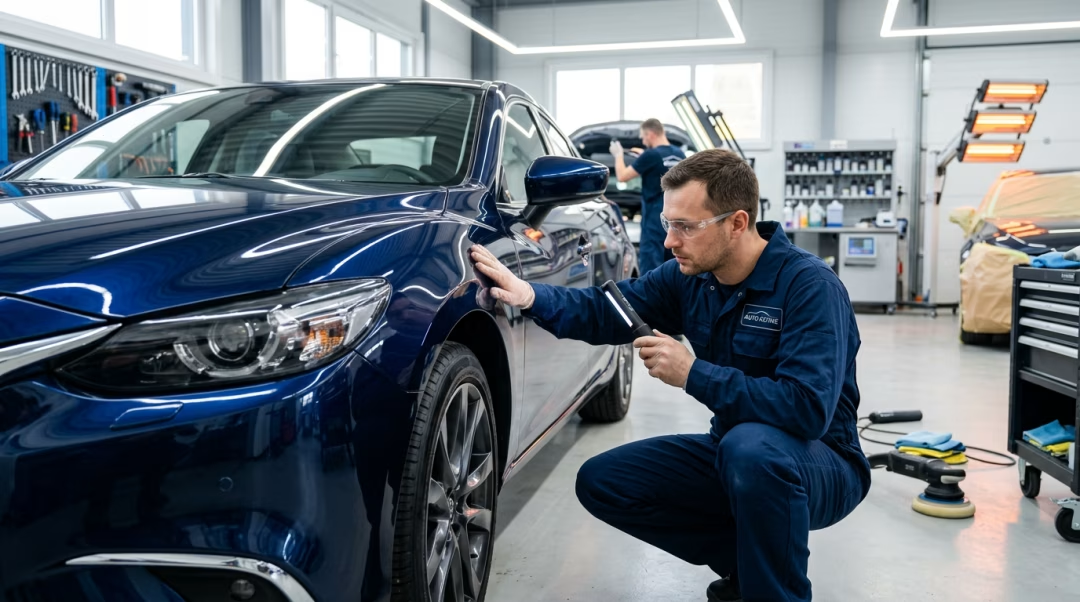
When your vehicle's fender is damaged, the path to restoration involves a detailed, multi-step process handled by skilled auto body technicians. It is not just about making it look good; it is about ensuring the repair is durable, safe, and perfectly integrated with the rest of your vehicle. The journey begins with a thorough evaluation to understand the full extent of the damage, both visible and hidden.
The first and most critical step is a comprehensive inspection. A technician will carefully examine the fender to classify the type and severity of the damage. This involves more than a quick glance. They will check for:
After this detailed assessment, a repair plan is created and a precise estimate is provided. This estimate will outline whether the fender can be repaired or if it requires a full replacement. You can learn more about what happens during a collision repair estimate to prepare for your appointment.
Based on the assessment, the technician will select the most appropriate repair method. There are several techniques used in the industry, each suited for different types of damage.
Paintless Dent Repair (PDR): For minor, shallow dents where the paint is not broken or cracked, PDR is an excellent option. Technicians use specialized tools to access the back of the panel and gently massage the dent out, preserving the original factory paint. This method is faster and more cost-effective than traditional repairs. Find out more about when PDR works best.
Traditional Dent Repair: When the dent is too sharp for PDR or the paint is damaged, traditional methods are used. This involves pulling or hammering the metal as close to its original shape as possible. A thin layer of body filler is then applied to smooth out any remaining imperfections. The area is then meticulously sanded to create a perfectly level surface, ready for priming and painting.
Fender Replacement: In cases of severe damage, such as large tears, extreme deformation, or extensive rust, repairing the fender may not be feasible or safe. In this scenario, the entire panel is replaced. The damaged fender is carefully removed, and a new one—ideally an OEM (Original Equipment Manufacturer) part—is installed. The new panel is then aligned perfectly with the surrounding body lines before being prepped for paint.
Achieving a flawless paint job is a critical part of fender repair. The goal is to make the repaired area completely indistinguishable from the rest of the car. This requires precision and expertise.
Once the paint is applied, it needs to cure properly. This is often accelerated in a specialized baking booth, which hardens the clear coat for maximum durability. After curing, any components that were removed, such as the fender liner, emblems, or lights, are reinstalled. A final quality control inspection is then performed. A technician will check for panel alignment, paint texture, and overall finish. The vehicle is then washed and detailed, ready to be returned to you in pristine condition. This final check is why a post-repair inspection matters so much for a quality outcome.
Not always. While technicians can repair a wide range of damage, including dents, creases, and scratches, there are limits. If the metal is severely stretched, torn, or has extensive rust, a full panel replacement is often the safer and more effective solution to ensure structural integrity and a lasting finish.
The timeline varies based on the extent of the damage. A simple paintless dent repair might take only a few hours. A more traditional repair involving body filler and repainting could take 2-3 days. A full fender replacement and paint job might take 3-5 days, depending on parts availability and the paint curing process.
Yes, a reputable auto body shop uses advanced technology to ensure a perfect match. With computer-aided paint matching systems and the use of blending techniques, technicians can create a seamless finish that is indistinguishable from your car's original factory paint.
Generally, repairing a fender is less expensive than replacing it, especially for minor to moderate damage. However, if the labor required to fix extensive damage exceeds the cost of a new panel, replacement becomes the more economical choice. Your technician will provide a detailed estimate comparing both options if applicable.
It can. A significant impact to the front fender, especially near the wheel, can sometimes transfer force to the suspension and steering components, potentially knocking the vehicle out of alignment. As part of a thorough inspection, a good body shop will check for any signs of alignment issues after a fender collision.