After a collision, the most visible sign of a quality repair is the fit and finish of the body panels. Precision panel alignment is the meticulous process of ensuring that every repaired or replaced panel—from doors and fenders to the hood and trunk—sits exactly as it did from the factory. This isn't just about making the car look good again; it's a critical aspect of restoring its integrity, functionality, and safety. Uneven gaps or misaligned panels are more than an eyesore; they can indicate underlying issues, compromise aerodynamics, and lead to problems like wind noise or water leaks. A perfect alignment is the hallmark of a professional repair, directly impacting your vehicle's long-term performance and protecting its resale value. When every seam is perfect and every line flows smoothly, you can be confident the repair was done right, both inside and out.
Achieving flawless panel alignment is a task that blends artistry with advanced technology. It requires a deep understanding of vehicle construction and an unwavering commitment to manufacturer specifications. Technicians use specialized tools to measure and adjust panels with sub-millimeter accuracy, ensuring every component functions seamlessly. This dedication to precision is what separates an average repair from an exceptional one. It guarantees that your doors will close securely, your vehicle will be protected from the elements, and its safety systems will perform as designed in a future incident.
When you pick up your vehicle after a repair, the first thing you notice is its appearance. You run your hand over the new paint, check for color match, and inspect the body lines. It's in this moment that the quality of the panel alignment becomes immediately apparent. Precision alignment means that the gaps between the hood and fenders, the doors and the body, and the trunk and quarter panels are uniform and consistent. These lines should flow seamlessly, creating a visually perfect exterior. But this process goes far beyond just curb appeal; it's a fundamental component of a comprehensive and safe collision repair.
Poorly aligned panels are often the most obvious sign of a rushed or subpar repair job, which is detailed in our guide on what causes panel gaps after a poor repair job. This visual flaw can significantly diminish your vehicle's worth, as savvy buyers and appraisers will spot it immediately. It raises questions about the overall quality of the work performed, which can negatively impact your vehicle's resale value. A car with perfect seams looks well-cared-for and properly restored, commanding a higher price and instilling confidence in potential buyers.
Every panel on your vehicle is designed to fit together for a reason. Proper alignment ensures that these components function as intended. Consider the simple act of opening and closing a door. A misaligned door may be difficult to shut, fail to latch securely, or create an annoying squeak or rattle. The same principle applies to the hood and trunk. A hood that doesn't sit flush could potentially fly open at high speeds, while a poorly sealed trunk can allow water to enter, leading to mold, rust, and damage to your belongings.
Proper panel alignment is also crucial for:
Perhaps the most critical reason for precision panel alignment is its connection to the vehicle's structural integrity and safety systems. The body panels are not just a cosmetic shell; they are part of a complex system designed to protect you and your passengers during an impact. They help distribute crash forces throughout the vehicle's frame and away from the occupant cabin.
If panels are not aligned correctly, it may be a symptom of deeper, unaddressed issues. For instance, a fender that won't line up could indicate that there are signs of structural frame damage that hasn't been properly repaired. A compromised frame cannot manage impact energy as designed, putting occupants at greater risk. Furthermore, the proper function of many Advanced Driver Assistance Systems (ADAS) depends on the exact placement of components housed within the body panels. A misaligned bumper, for example, could throw off the calibration of parking sensors or blind-spot monitors. This is why our process always includes steps to restore vehicle safety systems to factory specifications.
Achieving factory-perfect alignment is a skill that requires training, patience, and the right equipment. The process begins with a thorough assessment and precise measurements to understand the full extent of the damage. Technicians then use specialized frame-straightening machines and computerized measuring systems to pull the vehicle's structure back into its exact original dimensions.
Once the underlying structure is correct, the focus shifts to the panels themselves. Using high-quality components is non-negotiable, which is why OEM parts matter so much in collision repair. These parts are manufactured to the same precise specifications as the originals, ensuring a much better fit than many aftermarket alternatives. Technicians will then carefully install, adjust, and shim each panel, meticulously checking the gaps and clearances until they meet or exceed the manufacturer's standards. This commitment to quality is a key reason to choose a trustworthy repair shop with certified technicians. In the end, precision panel alignment is a testament to the quality of the entire repair, giving you peace of mind that your vehicle is beautiful, functional, and safe.
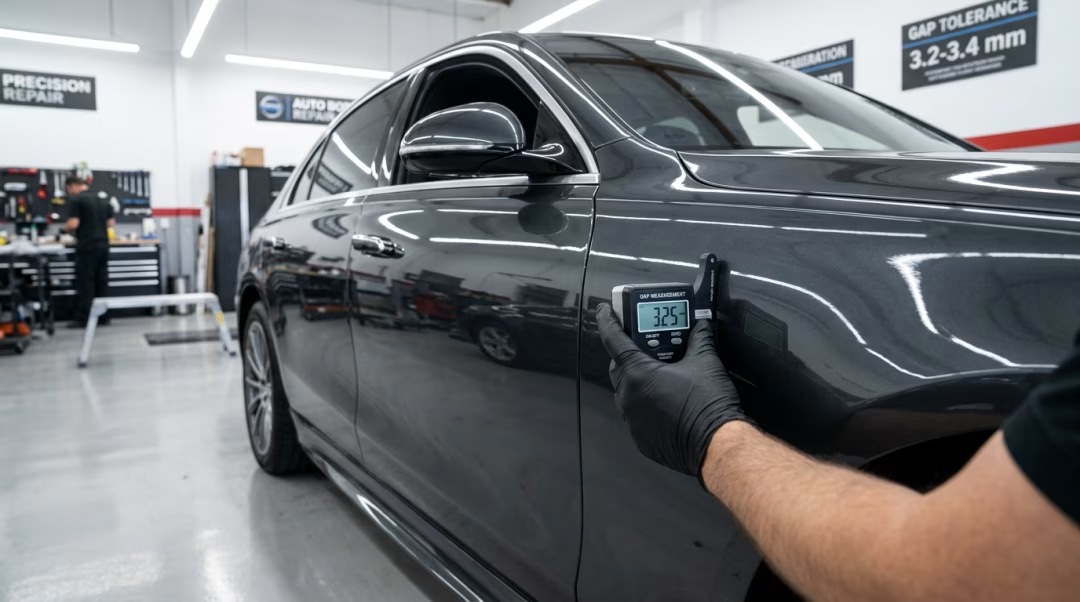
Panel gaps are the small spaces or seams between different body panels of a vehicle, such as the gap between the door and the fender. They are measured with extreme precision during manufacturing and repair to ensure a perfect fit. Consistent and uniform panel gaps are a key indicator of high-quality assembly. In repairs, measuring these gaps ensures that the vehicle's structure is correctly aligned and that all parts fit together as the manufacturer intended, which is crucial for aesthetics, function, and safety.
Yes, absolutely. While poor alignment is visually unappealing, it can lead to significant functional issues. These can include wind noise at high speeds, water leaks that damage your interior, and difficulty opening or closing doors, the hood, or the trunk. It can also cause premature wear on hinges and latches and even negatively impact your vehicle's aerodynamics and fuel efficiency.
Professional shops use a combination of advanced technology and skilled craftsmanship. The process starts with ensuring the vehicle's frame or unibody is perfectly straight using computerized measuring systems. Technicians then use high-quality OEM parts whenever possible, as they are designed to fit perfectly. They meticulously adjust, shim, and tighten each panel, constantly measuring the gaps to match factory specifications. This attention to detail is what defines a quality repair.
Yes, it can. Many modern vehicles have sensors for safety systems like blind-spot monitoring, parking assist, and collision avoidance integrated into body panels, particularly the bumpers. If these panels are not perfectly aligned, the sensors can be aimed incorrectly, leading to system malfunctions or false warnings. More importantly, incorrect panel alignment can be a sign of underlying structural damage, which compromises the vehicle's ability to protect you in a future collision.
Yes, in most cases, poor panel alignment from a previous, subpar repair can be corrected. A qualified body shop will first need to diagnose the root cause of the misalignment. It may be a simple matter of readjusting the panels, or it could point to more serious issues like an improperly repaired frame. A thorough inspection will determine the necessary steps to correct the fit and finish and restore the vehicle's integrity.
The vehicle's frame is the foundation upon which all body panels are mounted. If the frame is bent or damaged, even by a small amount, it is impossible to achieve proper panel alignment. The mounting points for the fenders, doors, and bumpers will be in the wrong locations, causing uneven gaps and panels that do not sit flush. This is why professional frame straightening is the essential first step in any major collision repair before panel work can even begin.