Considering a fresh coat of paint for your vehicle? One of the most common questions we hear is, "How long does a full vehicle repaint take?" The answer is not as simple as a single number, as the timeline can vary significantly. A high-quality, comprehensive repaint is an intricate process that involves much more than just spraying on a new color. The total time depends on several key factors, including the vehicle's initial condition, its size, the complexity of the disassembly required, and the specific type of paint and finish you choose. A quick, budget-friendly job might take a few days, but a thorough, show-quality finish that includes extensive bodywork and preparation can take several weeks. Understanding the detailed steps involved helps set realistic expectations for when you will have your beautifully restored car back on the road. We are here to guide you through the process from start to finish.
Ultimately, the timeline for a complete vehicle repaint is a direct reflection of the quality you desire. Rushing the process often leads to imperfections and a finish that does not last. From meticulous surface preparation to allowing adequate curing time between each coat, every step is crucial for achieving a durable, factory-like shine. While the process typically ranges from one to three weeks, investing this time ensures the final result enhances both your vehicle's appearance and its long-term value. Our team prioritizes craftsmanship over speed.
Getting a full vehicle repaint is a significant investment in your car's aesthetics and longevity. While the dream of a flawless, new finish is exciting, the process itself is a detailed craft that requires patience. The total time commitment can range from as little as one week to over a month, depending on a variety of critical factors. A reputable body shop will never rush this process, as each stage builds upon the last to create a durable and stunning final product. Let's break down the step-by-step journey your vehicle takes in the paint booth and explore what influences the overall timeline.
Before a single drop of paint is sprayed, several variables must be assessed. These initial conditions play the largest role in dictating the project's duration. A shop can provide a more accurate estimate after a thorough pre-repair damage inspection.
A professional repaint is a systematic process broken down into distinct phases. Each phase has its own timeline, and delays in one can impact the entire project schedule.
Phase 1: Preparation and Disassembly (1 to 3 Days)
This foundational stage is where the magic begins. The vehicle is first thoroughly cleaned and degreased to remove any contaminants that could interfere with paint adhesion. Technicians then carefully remove parts like bumpers, grilles, headlights, taillights, door handles, and exterior trim. This ensures that every edge gets painted properly and eliminates the risk of overspray on these components. This meticulous disassembly is a hallmark of a high-quality job and separates professional shops from budget painters.
Phase 2: Bodywork and Surface Preparation (2 to 7+ Days)
This is often the most time-consuming phase. The existing paint is sanded down to create a smooth, uniform surface for the new paint to adhere to. Any imperfections discovered, such as dents, dings, or rust spots, are expertly repaired. This may involve using body filler, welding, or replacing panels if the damage is severe. After bodywork, multiple layers of primer are applied and sanded to create a perfect canvas. Finally, the entire vehicle is masked off with precision, protecting windows, wheels, and any other areas that will not be painted.
Phase 3: Painting and Curing (2 to 4 Days)
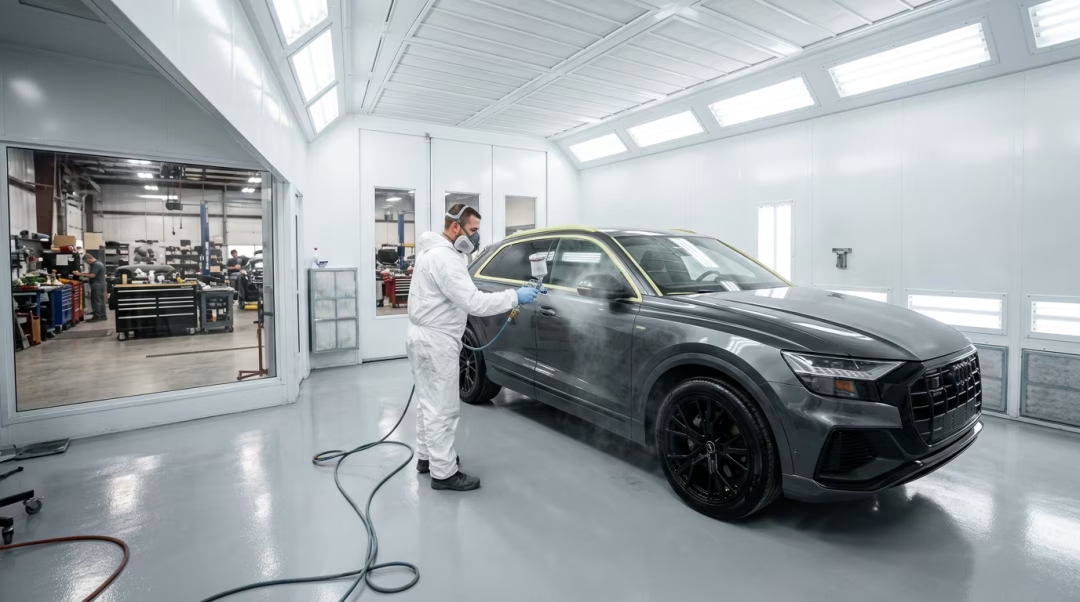
With the prep work complete, the vehicle moves into a controlled, dust-free paint booth. Here, the magic happens. The painter applies several coats of the base color, allowing for proper "flash" time between each coat. One of the keys to success is knowing how auto paint color matching technology works to ensure a perfect shade. Following the base coat, multiple layers of clear coat are applied to provide protection and a deep, glossy shine. The clear coat is essential for durability. The vehicle is then often "baked" at a low temperature to accelerate the curing process, hardening the paint for a resilient finish.
Phase 4: Reassembly and Finishing (1 to 3 Days)
Once the paint has fully cured, the final stage begins. The masking materials are carefully removed. The new paint surface is often wet-sanded with ultra-fine sandpaper and then polished and buffed to remove any minor imperfections and achieve a mirror-like smoothness. This step is what creates that "wet" look of a show-quality finish. Finally, all the trim, lights, and hardware that were removed in Phase 1 are reinstalled. The vehicle undergoes a final, rigorous quality control inspection before it is ready to be returned to you.
While it's tempting to seek out the fastest turnaround time, rushing a paint job is a recipe for disaster. Proper adhesion, chemical bonding, and curing are all time-dependent chemical processes. Cutting corners can lead to a host of problems down the road, such as peeling, cracking, bubbling, or a dull finish. A professional shop understands the science behind automotive paints and respects the time required for each step. This patience is what protects your investment and ensures your vehicle looks incredible for years to come. It also helps protect your vehicle's resale value, a critical aspect we discuss in our post on how repair protects resale value. When you're ready to see examples of our finished work, check out our sold inventory or browse our current inventory for high-quality used vehicles.
While the paint may feel dry to the touch, it takes time to fully cure and harden. Most shops recommend waiting at least 24 to 48 hours before driving. For the first 30 days, you should avoid high-pressure car washes and be gentle with the new finish. We have a detailed guide on how to wash a freshly painted vehicle for more information.
The cost of a full repaint varies as much as the timeline. A basic job might start around a few thousand dollars, while a high-end, show-quality repaint with extensive bodywork and a color change can cost well over $10,000. The final price depends on the vehicle's condition, size, paint quality, and the labor involved. It is always best to get a detailed estimate.
Yes, a skilled technician can achieve a near-perfect match. Professional body shops use advanced computerized color-matching systems that analyze your vehicle's paint code and account for fading from sun exposure. Using precise formulas and techniques like blending, they can create a seamless match. You can learn more about how shops match factory paint codes in our resources.
It is crucial to wait for the paint to fully cure before applying any wax or sealant. The solvents in the new paint need to evaporate, a process called "outgassing." Applying wax too early can trap these solvents and damage the finish. Most paint manufacturers and body shops recommend waiting at least 60 to 90 days. For more details, see our article on how long to wait before waxing.
Typically, insurance only covers repainting as part of a collision repair claim. If specific panels are damaged in an accident, your policy will cover the cost of repairing and repainting those panels to match the rest of the vehicle. A full repaint for cosmetic reasons, such as faded paint or changing the color, is usually not covered and would be an out-of-pocket expense.