Have you ever wondered what happens when your insurance company declares your car a "total loss" after an accident? It is not just about the visible damage; it is a financial calculation based on something called the total loss threshold. This threshold is a specific percentage, often determined by state law, that compares the cost of repairs to the vehicle's actual cash value (ACV) before the accident occurred. If the repair costs exceed this percentage, the insurer will deem the car totaled. Understanding this concept is crucial for any vehicle owner, as it directly impacts the outcome of an insurance claim and what happens to your car. It helps you navigate conversations with your adjuster and make informed decisions about your vehicle's future, whether that means accepting a payout or exploring other options. This knowledge is equally valuable when you are looking to purchase a pre-owned vehicle, as a car's history might include a total loss event.
Navigating the aftermath of a collision can be stressful, but being informed about the total loss threshold empowers you. This critical percentage dictates whether you will be getting your car repaired or receiving a check for its value. For those in the market for a dependable used car, this information is also key. Knowing a vehicle's history, including whether it has ever been declared a total loss, is a fundamental part of making a smart purchase. It ensures you understand the background of any vehicle you consider, especially those with rebuilt titles in our inventory.
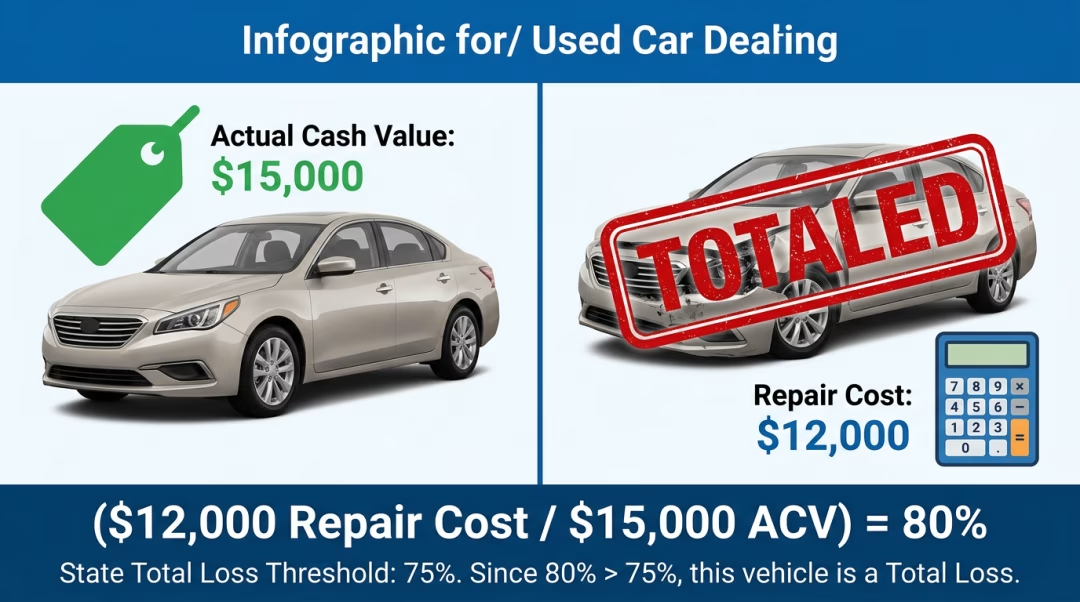
The term "totaled" often brings to mind images of a completely mangled vehicle, but the reality is far more nuanced. A car can look repairable to the untrained eye and still be declared a total loss by an insurance company. The decision hinges almost entirely on the total loss threshold (TLT), a critical figure in the world of auto insurance and collision repair. This threshold is the tipping point where an insurer decides it is no longer economically viable to repair a damaged vehicle. Instead, they will pay the policyholder the vehicle's pre-accident Actual Cash Value (ACV), minus any deductible.
This threshold is not a universal number; it varies significantly from one state to another. Many states have a specific percentage mandated by law. For example, a state might have a TLT of 75%. This means if a car's ACV is $10,000, and the estimated cost to repair it is $7,500 or more, it must be declared a total loss. Other states use what is known as a Total Loss Formula (TLF), which adds the cost of repairs to the potential salvage value of the damaged car. If that sum exceeds the ACV, the car is totaled. In states without a specific regulation, insurance companies can set their own internal thresholds, though they still generally follow a similar financial logic.
The concept of Actual Cash Value is central to the total loss calculation. It is important to understand that ACV is not the same as what you paid for the car or what you might still owe on your auto loan. ACV represents the market value of your vehicle the moment before the accident happened. Insurance companies use several factors to calculate this value, including:
An insurance adjuster will compile this information to arrive at a final ACV figure. If you disagree with their assessment, you can often present your own evidence, such as maintenance records or listings for comparable vehicles for sale nearby, to negotiate a different value.
When a vehicle is declared a total loss, the insurance company effectively buys the damaged car from you by paying out its ACV. The title of the vehicle is then transferred to the insurance company, and the state DMV issues it a "salvage" title. This branding permanently indicates that the vehicle was deemed too damaged to be worth repairing by an insurer.
These salvage vehicles are often sold at auction to auto recyclers, mechanics, and rebuilders. A rebuilder might purchase a salvage vehicle with the intent to repair it and return it to roadworthy condition. After completing all necessary repairs, which often includes fixing structural damage, the vehicle must undergo a thorough inspection by a state-certified official. If it passes, the DMV will issue a new "rebuilt" or "reconstructed" title. This title allows the car to be legally registered, insured, and driven again, but it permanently carries the history of being a total loss.
For consumers considering purchasing a vehicle with a rebuilt title, it is essential to proceed with caution and diligence. While they can be a good value, it is critical to get a comprehensive pre-purchase inspection from a trusted mechanic to verify the quality of the repairs. Understanding the difference between a clean title and a rebuilt title is a cornerstone of being a savvy used car buyer. You can learn more about financing options for all types of vehicles in our financing frequently asked questions section.
In many cases, yes. You can choose to "owner-retain" the salvage vehicle. The insurance company will pay you the ACV minus your deductible and the salvage value they would have received at auction. You will then be responsible for getting the vehicle repaired and inspected to receive a rebuilt title before you can legally drive it again.
This situation is known as being "upside-down" or having negative equity. The insurance payout will go to your lender, but you will still be responsible for paying the remaining loan balance. This is where GAP (Guaranteed Asset Protection) insurance is beneficial, as it is designed to cover this difference.
Not necessarily. A total loss is a financial decision, not always a safety one. An older car with a low ACV could be totaled due to cosmetic damage, like severe hail damage, that is expensive to repair but does not affect its structural integrity or drivability. However, any vehicle with a salvage history should undergo a thorough inspection to confirm its safety.
The timeline can vary. It depends on the adjuster's schedule, the complexity of the damage assessment, and how quickly the repair shop can provide a detailed estimate. It can take anywhere from a few days to a couple of weeks after the initial claim is filed. You can learn more by reading about how to read a collision repair estimate.
They can be, provided you do your homework. A vehicle with a rebuilt title that has been professionally and correctly repaired can offer reliable transportation for a lower price. The key is to get a pre-purchase inspection from an independent, trusted mechanic to ensure the quality of the repair work and the overall safety of the vehicle before you buy.