After an accident, the collision repair estimate you receive from an insurance company can feel like a complex puzzle written in a foreign language. Filled with industry jargon, acronyms, and line items, it is often overwhelming for the average vehicle owner. Understanding this document is crucial, however, as it directly impacts the quality and safety of your repair. This guide is designed to demystify the process, empowering you with the knowledge to read your estimate with confidence. We will break down each section, from labor rates and parts classifications to hidden fees and charges for materials. Knowing what to look for ensures you can have an informed conversation with your chosen body shop and advocate for a repair that restores your vehicle to its pre-accident condition. A proper repair not only looks good but also maintains your car's structural integrity and resale value, and it all starts with understanding the initial paperwork.
Navigating the aftermath of a collision is stressful enough without the added confusion of deciphering your insurance estimate. By taking the time to learn the key components and terminology, you transform from a passive recipient into an active participant in your vehicle's restoration. This knowledge is your best tool for ensuring transparency from both the insurer and the repair facility. It allows you to ask the right questions and verify that the proposed repairs align with manufacturer standards, protecting your safety and your investment for years to come.
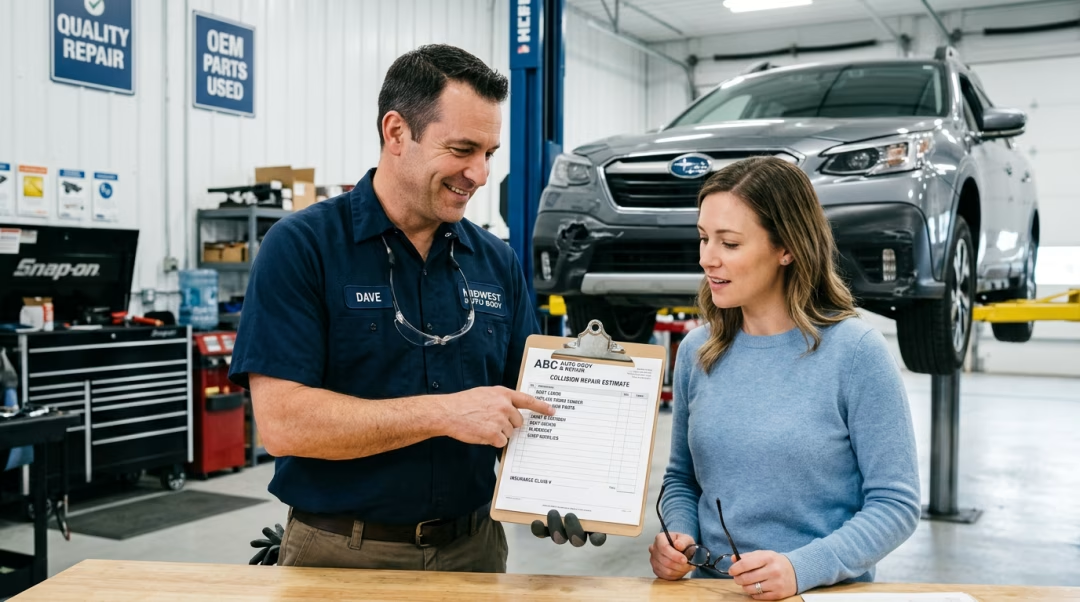
An insurance estimate is more than just a price quote; it is a detailed blueprint for your vehicle's repair. It outlines every procedure, part, and minute of labor the insurance company has agreed to cover. Getting familiar with its structure is the first step toward understanding the entire process. While formats can vary slightly between insurance providers, they all contain the same core sections that detail the cost of bringing your vehicle back to life.
Let's break down the primary components you will find on almost any estimate from an insurance adjuster or body shop.
Labor is one of the most significant costs on any repair bill. It is not just one flat rate; it is broken down into several categories based on the type of work being performed. The estimate calculates labor in hours, with each type of labor having a specific hourly rate set by the shop or dictated by the insurance company. For more details on the entire process, you can review how the auto body insurance claims process works.
The parts section is arguably the most important area to scrutinize, as the type of parts used will directly affect your vehicle's safety, appearance, and value. Insurance companies often default to the cheapest options to control costs, but you may have the right to request higher quality parts. Understanding the common acronyms is key. For a deeper dive, read about why OEM parts matter in collision repair.
It is extremely important to understand that the initial insurance estimate is just that, an estimate. It is often written based only on visible damage. Once a body shop begins disassembling your vehicle, it is common to find hidden damage that was not apparent during the initial inspection. When this occurs, the shop will document the additional damage and submit a "supplemental claim" to the insurance company for approval. This is a normal part of the process. A low initial estimate is not a cause for alarm, as long as your chosen shop is thorough in identifying and documenting all necessary supplemental repairs to ensure a complete and safe restoration. Be sure to ask your shop about the possibility of a supplemental damage claim.
Beyond the main sections, you may see other terms and line items that can be confusing. "Betterment" is a charge applied when a wear-and-tear item like a tire or battery is replaced with a new one; the insurance company may ask you to pay the difference for the "better" part you received. "Sublet" refers to any work that the body shop sends to a specialist, such as wheel alignments or ADAS sensor recalibration. Finally, "Paint and Materials" is a charge that covers the cost of consumables like sandpaper, masking tape, primers, and the paint itself, often calculated based on the number of paint labor hours.
An initial estimate is a preliminary assessment of the visible damage, often written before the vehicle is taken apart. A supplement is an additional estimate for hidden damage discovered during the teardown and repair process. The final repair cost is the sum of the initial estimate and all approved supplements.
Different repair tasks require different levels of skill, training, and equipment. For this reason, labor is categorized into types like Body, Paint, Mechanical, and Structural, each with its own specific hourly rate reflecting the complexity and specialization of the work involved.
LKQ stands for "Like Kind and Quality." It refers to a used, undamaged part salvaged from another vehicle of the same make and model. It is an original manufacturer part (OEM) but is not new. These are also commonly referred to as recycled or salvage parts.
Yes, in most states, you have the legal right to choose where your vehicle is repaired. While your insurance company may have a network of "preferred" or "direct repair" shops, you are not obligated to use them. You can select any licensed repair facility you trust to perform the work.
Betterment, also known as depreciation, is a charge an insurer may apply when a part that wears out over time (like a tire, battery, or suspension component) is replaced with a brand new one. The insurance company argues that the new part has made your car "better" than it was before the accident, so you are asked to pay the difference in value.