When a vehicle is involved in a collision, the visible damage like dents, scratches, and broken parts is only part of the story. Modern cars are incredibly complex, packed with dozens of computers, sensors, and electronic modules that control everything from the airbags to the braking system. An impact can easily disrupt this intricate network, causing hidden electronic issues that are not immediately apparent. This is where diagnostic scanning becomes an indispensable tool for a professional auto body shop. A comprehensive scan before and after the repair process is no longer an option but a mandatory step for ensuring a safe and complete restoration. It allows technicians to see a full picture of the vehicle’s health, identify all fault codes, and create a precise plan to return your car to its pre-accident condition, ensuring every system functions as the manufacturer intended.
Ultimately, the use of diagnostic scans is about ensuring your safety and the long-term reliability of your vehicle. Skipping this crucial step can lead to malfunctioning safety systems, persistent warning lights, and even performance issues down the road. By performing a post-repair scan, technicians verify that all repairs were successful and that no new issues were introduced. This process is especially vital for calibrating Advanced Driver-Assistance Systems (ADAS), which rely on perfectly aligned sensors to function correctly. A final, clean bill of health from the diagnostic tool is the only way to certify a repair is truly complete.
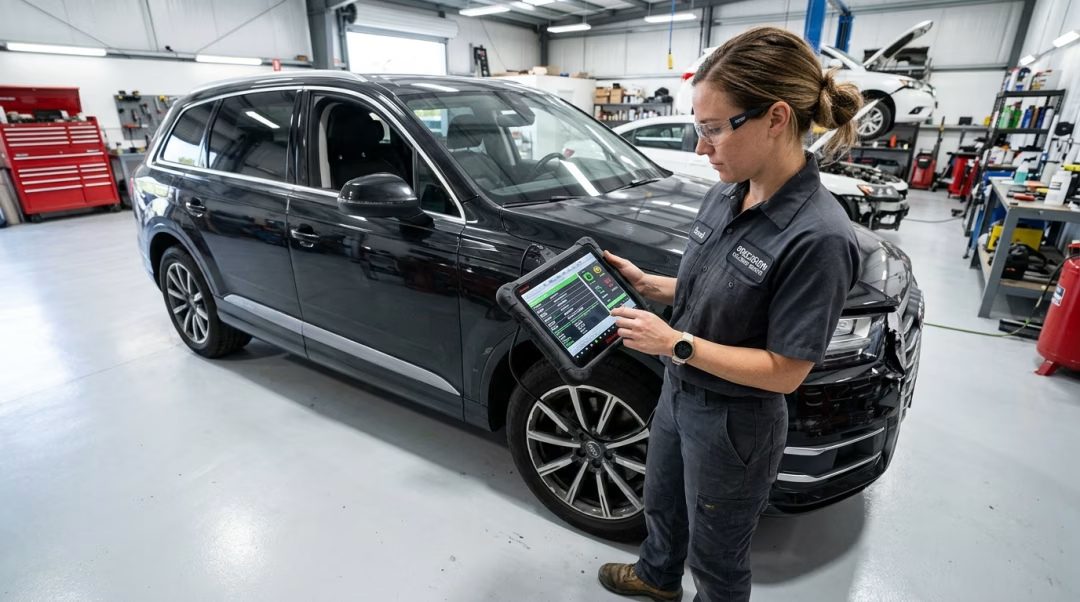
In the past, collision repair was primarily a mechanical and cosmetic discipline focused on straightening frames and matching paint. Today, it has evolved into a highly technical field where electronics play a central role. A minor fender bender that seems to only require a new bumper cover could have disconnected a parking sensor, jarred an airbag impact sensor, or disrupted the radar for your adaptive cruise control. Without a diagnostic scan, these issues would go completely unnoticed, leaving you with a car that looks perfect but is not performing safely. Think of a diagnostic scan as an X-ray for your vehicle's electronic nervous system. It is a non-invasive procedure where a technician connects a specialized computer to your vehicle's On-Board Diagnostics (OBD-II) port. This tool communicates with all the individual control modules in your car, asking them to report their status and any problems they have detected. The results provide a list of Diagnostic Trouble Codes (DTCs), each pointing to a specific issue that needs to be addressed.
A reputable collision repair facility will never perform just one scan. The industry standard, and the process recommended by virtually all vehicle manufacturers, is a two-scan approach to ensure nothing is missed.
This is the first critical step after a vehicle arrives at the shop. The pre-repair scan establishes a baseline of the vehicle's electronic health. It identifies all existing DTCs, including those that may have been present before the accident and those directly caused by the collision. This information is vital for several reasons. First, it allows the shop to create the most accurate and comprehensive repair plan possible. Knowing about a faulty wheel speed sensor from the start prevents surprises later. Second, it provides essential documentation for the insurance claim, ensuring that all necessary repairs are covered. A thorough collision repair estimate must include the time and procedures for addressing these electronic issues.
After all physical and mechanical repairs are finished, the post-repair scan serves as the ultimate quality control check. Its purpose is to confirm that all DTCs identified in the pre-scan have been resolved and that no new codes were triggered during the repair process. For instance, disconnecting a door to repair it can sometimes trigger an airbag system code. The post-repair scan ensures these temporary codes are cleared and that the system is fully operational. This final scan is also when technicians perform any necessary recalibrations. This is particularly important for safety systems, as explored in our guide on restoring vehicle safety systems. The successful completion of a post-repair scan, with zero remaining trouble codes, is the shop's proof that the vehicle has been returned to its safe, pre-accident state.
A comprehensive scan goes far beyond the check engine light. It communicates with a wide range of modules that are critical to your vehicle's operation and safety. Technicians look for codes related to:
By not performing a scan, a repair shop is taking a significant risk with your vehicle and your safety. Choosing a facility that makes diagnostic scanning a standard part of their process demonstrates a commitment to quality and a thorough understanding of modern vehicle construction. To learn more about what to look for in a repair facility, read our guide on how to choose a collision repair shop.
Yes, absolutely. Even a low-speed impact that only scuffs a bumper can be enough to dislodge a sensor or trigger a fault code in a sensitive electronic module. Many critical sensors for parking assist, blind-spot monitoring, and collision avoidance are located in the bumpers. A pre-scan and post-scan are the only ways to be certain these systems are still working correctly.
Most reputable insurance companies understand that diagnostic scanning is an integral part of a safe and complete repair process for modern vehicles. The cost of pre-repair and post-repair scans is typically included as a necessary procedure in the insurance estimate. If you have questions, it is always best to discuss them with your claims adjuster and your chosen repair shop.
A pre-repair scan is performed when the vehicle first arrives to create a complete picture of all existing electronic issues, both related and unrelated to the accident. A post-repair scan is performed after all work is completed to verify that all original issues have been fixed, that no new issues were created during the repair, and that all systems are functioning properly.
While many general repair shops have basic code readers for check engine lights, collision repair requires more advanced, manufacturer-specific scanning tools. These tools can communicate with all vehicle modules, not just the powertrain. Furthermore, technicians need specialized training to interpret the data correctly and perform the necessary recalibrations for complex systems like ADAS.
Diagnostic Trouble Codes, or DTCs, are alphanumeric codes that a vehicle's onboard computer system generates and stores when it detects a problem or malfunction in a specific circuit or component. Each code corresponds to a particular fault, helping technicians quickly identify the source of the problem, from a faulty sensor to a communication error between modules.