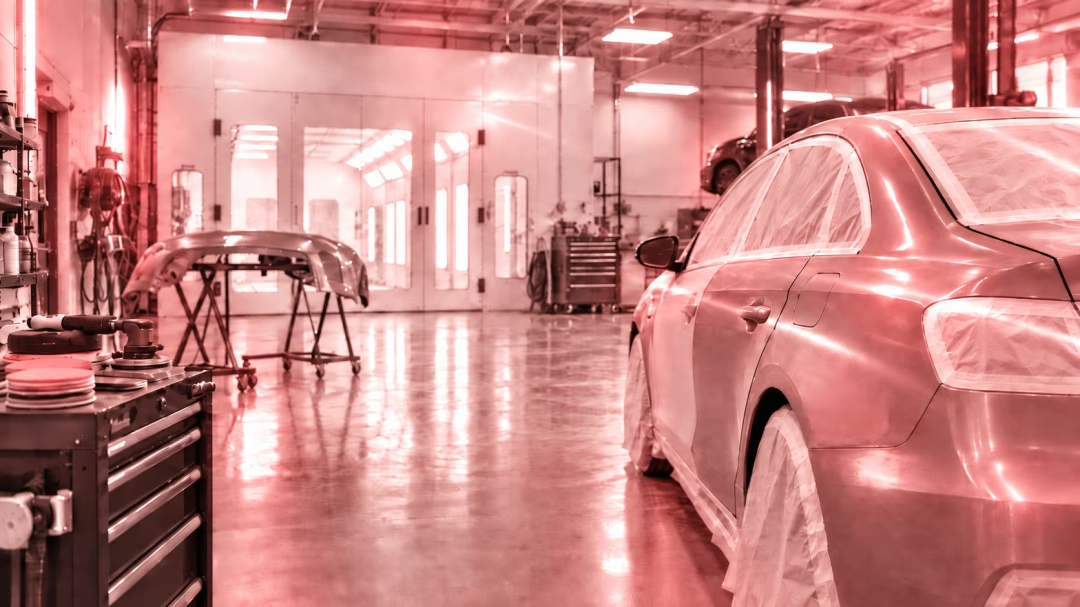
When your vehicle suffers a dent, the path to repair isn't always straightforward. A common question vehicle owners face is whether the damage can be fixed with body filler or if it requires a complete panel replacement. Understanding the difference is crucial for ensuring a safe, lasting, and high-quality repair. Body filler is an excellent solution for minor cosmetic imperfections, shallow dents, and surface irregularities where the metal is not overly stretched or compromised. However, for significant damage involving deep creases, sharp impacts, or damage to structural body lines, replacing the panel is often the only way to restore the vehicle's original integrity, strength, and appearance. Making the right choice not only impacts the final look of the repair but also affects your vehicle's safety and long-term value. This guide will help you understand the key factors our technicians consider when assessing body damage to make the best recommendation for your car.
Ultimately, the most reliable way to determine the correct repair method is through a professional evaluation. An experienced technician can assess factors invisible to the untrained eye, such as metal fatigue, hidden structural issues, and the precise limitations of body filler. They use specialized tools and knowledge to diagnose the full extent of the damage, ensuring the chosen repair method is both safe and effective. If you are unsure about the severity of a dent on your vehicle, we invite you to schedule an appointment with our expert team for a thorough inspection.
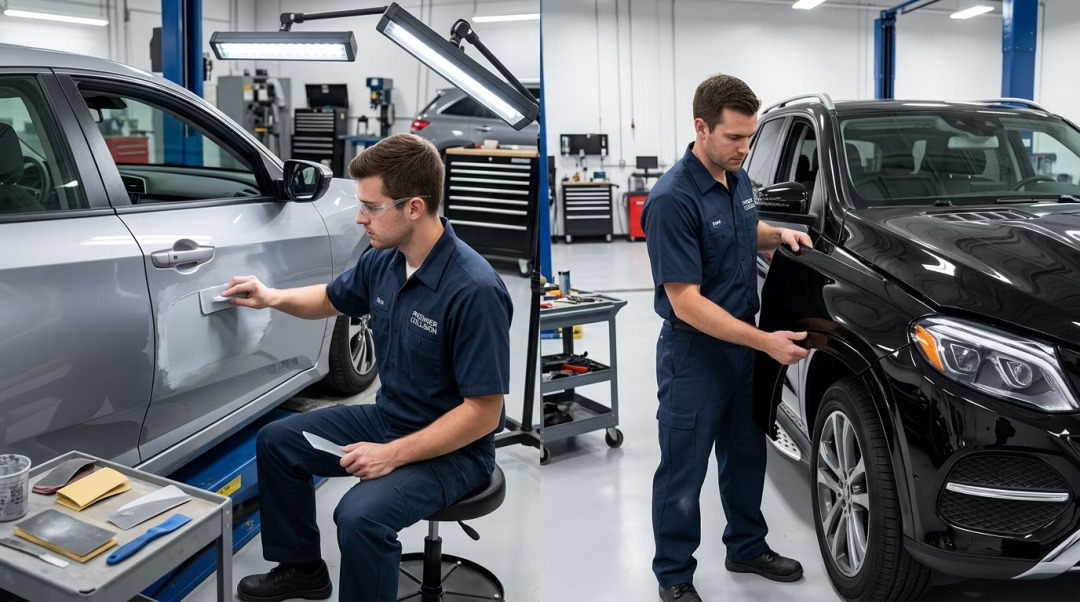
Every dent tells a story. From a stray shopping cart to a minor fender bender, the impact on your vehicle's bodywork can range from a minor nuisance to a serious structural concern. The decision between using body filler and opting for a full panel replacement is one of the most critical junctures in the auto body repair process. This choice is not merely about aesthetics; it is about restoring the vehicle's safety, structural integrity, and value. While body filler, when used correctly, is a valuable tool in a technician's arsenal, it has clear limitations. Conversely, panel replacement is a more intensive process reserved for damage that cannot be safely or effectively corrected otherwise. Let us explore the specific criteria that guide this important decision.
Body filler is a polyester resin-based compound used to fill in minor indentations and level out surfaces on a vehicle's body panels. When applied correctly by a skilled technician, it can perfectly smooth out shallow dents, deep scratches, and minor imperfections after the underlying metal has been worked back as close to its original shape as possible. The key principle is that filler should be used sparingly, as a finishing touch, not as a primary structural component. Its purpose is to create a flawless surface for primer and paint. If you are ever looking through our used inventory, you can be sure that any prior body work has been professionally assessed to meet our high standards.
Panel replacement involves completely removing the damaged part—such as a door, fender, or hood—and installing a new one. This approach is required when the damage is too severe for a filler-based repair to be structurally sound or durable. Attempting to fix severe damage with excessive amounts of body filler can lead to cracking, shrinking, and a poor-quality finish that will not last. More importantly, it can compromise the safety of the vehicle. Modern vehicles rely on the specific shape and strength of their body panels to manage crash energy, and a panel weakened by severe damage cannot perform as designed. Learn more about why OEM parts matter in collision repair for ensuring a perfect fit and function.
A professional technician will analyze several factors to recommend the best course of action. These elements provide a complete picture of the damage, allowing for an informed decision.
1. Depth and Size of the Dent: This is the most immediate consideration. A wide, shallow dent the size of a dinner plate might be a candidate for repair, especially if paintless dent repair is an option. However, a small but very deep and sharp dent the size of a golf ball has likely stretched the metal beyond its elastic limit, making a filler repair unreliable. As a rule of thumb, if a dent is deeper than a quarter-inch, panel replacement is often considered.
2. Location of the Damage: Where the dent is located is just as important as its size. Dents on flat, open areas of a panel (like the center of a door) are easier to repair. Damage located on a body line, a curved edge, or near a seam is significantly more complex. These areas are critical to the panel's strength and visual alignment with the rest of the car. Recreating these sharp, precise lines with body filler is extremely difficult and often results in a weak, unnatural-looking repair. This is especially true for unibody vehicles where panel shape contributes to overall vehicle rigidity, a concept we explore in our article on what is unibody repair.
3. Condition of the Paint and Metal: If the paint is cracked, flaking, or broken, the seal protecting the metal underneath is compromised. This damage requires sanding, priming, and repainting regardless of the dent repair method. More importantly, if the metal itself is stretched, torn, or punctured, body filler cannot restore its strength. Stretched metal is thinner and weaker, and simply filling the void does not fix the underlying problem. A technician will feel the panel for "oil canning"—a popping or flexing sensation that indicates the metal has been fatally weakened.
4. Panel Material: The material of the panel also plays a significant role. While traditional steel panels are relatively straightforward to work with, many modern vehicles use aluminum or high-strength steel (HSS). Aluminum has less "memory" than steel and is more prone to stretching and tearing, making repairs more difficult and often favoring replacement. High-strength steel is designed to be incredibly rigid and can be difficult to pull back into shape once deformed. Attempting to repair HSS improperly can compromise its structural properties.
For more details on our repair processes, feel free to visit our main vehicle service page or contact us directly with any questions.
No, body filler is not suitable for large or deep dents. It is designed to be applied in thin layers to smooth out minor imperfections after the metal has been repaired as much as possible. Using thick layers of filler to repair a large dent will lead to cracking, shrinking, and eventual failure of the repair, as it lacks the structural strength of the metal panel.
While the cost of a new panel itself is a factor, panel replacement is not always the more expensive option in the long run. An attempt to repair a severely damaged panel can be extremely labor-intensive, requiring hours of pulling, hammering, and filling. In many cases, the combined cost of this extensive labor can exceed the cost of simply replacing the panel, and the replacement often yields a superior, more durable result.
When used correctly for minor cosmetic damage, a professional body filler repair can last the lifetime of the vehicle. However, when used improperly on severe damage, it will not. A brand new panel, properly installed and painted, restores the vehicle to its factory specifications and is guaranteed to last. An improper filler repair is susceptible to environmental stresses, vibrations, and temperature changes that can cause it to fail over time.
There are several signs of a bad repair. Look for paint that does not quite match the surrounding panels, waves or ripples in the surface that are visible in certain lighting, or a "muddy" appearance over body lines. You can also use a small magnet; it will stick firmly to a metal panel but will have a weak or non-existent attraction to areas with thick body filler. Our team at the dealership meticulously inspects every vehicle for such issues.
A professionally performed panel replacement using high-quality parts and expert paint matching should have a minimal impact on resale value compared to leaving the damage unrepaired. A poor repair with excessive filler is far more detrimental to a vehicle's value. Full disclosure of professional repairs, backed by documentation, shows responsible ownership and can preserve the car's worth. This is part of how we accurately value your trade.