Being involved in a car accident is a jarring and stressful experience, but the confusion can feel overwhelming when the other driver is clearly responsible. Knowing the correct steps to take immediately following the incident is crucial for protecting your rights and ensuring you receive fair compensation for any damages or injuries. This guide is designed to provide you with a clear roadmap for handling an at-fault accident claim. From documenting the scene to communicating with insurance adjusters, we will walk you through the process so you can navigate this challenging situation with confidence. Taking control of the situation starts with being informed, and the information here will empower you to manage your claim effectively and get your vehicle, and your life, back on track without unnecessary delays or financial strain. Following a structured approach will help you avoid common mistakes and secure the outcome you deserve.
Navigating the aftermath of a collision you did not cause requires careful action. This comprehensive guide details every critical step, starting from the moment the accident occurs. You will learn precisely how to gather essential evidence at the scene, the right way to report the incident to the at-fault party's insurance provider, and how to manage the entire claims process. We will cover how to secure a fair repair estimate, your right to choose a repair facility, and what to do if your vehicle is declared a total loss.
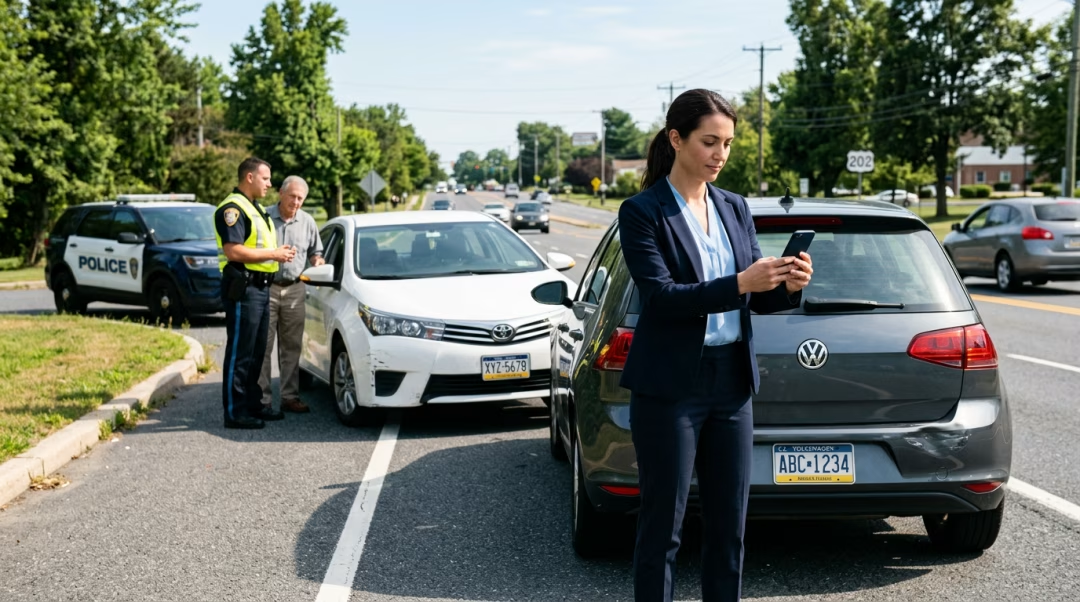
When another driver's negligence causes an accident, they are financially responsible for the aftermath. This responsibility is handled through their auto insurance policy. The process of filing what is known as a "third-party claim" directly with their insurer can seem daunting, but it is the most direct path to compensation. Unlike filing with your own insurance, a third-party claim means you will be dealing with an adjuster whose primary goal is to minimize their company's payout. Therefore, being prepared, organized, and persistent is key. This guide breaks down the journey into manageable steps, ensuring you are well-equipped to handle the process from start to finish.
What you do in the first few minutes and hours after a collision can significantly impact the outcome of your claim. Your priority is safety, followed immediately by documentation. Collecting accurate information creates a strong foundation for your claim and prevents the other party from later disputing the facts.
Once you have left the scene and ensured your immediate safety, the next step is to initiate the claim. You will be reporting the accident to the other driver's insurance company. You can usually find a phone number for their claims department on their website or the insurance card they provided.
When you call, state clearly that you are filing a third-party claim for an accident caused by their policyholder. Be prepared to provide the date, time, and location of the incident, their policyholder's name and policy number, and the police report number. The insurance company will assign a claims adjuster to your case. This person will be your primary point of contact. During this initial call and all subsequent communications, it is vital to remain calm and factual. Do not offer opinions or speculate on the cause of the accident or the extent of your injuries. Simply describe what happened. If they ask to take a recorded statement, you have the right to decline or to request time to prepare. For more information, you can explore our page on how the auto body insurance claims process works.
After the claim is filed, the adjuster will need to assess the damage to your vehicle. They may send their own appraiser or ask you to take your car to one of their approved repair centers for an estimate. It is important to remember that you have the legal right to choose your own collision repair shop. You are not obligated to use a facility from the insurer's preferred network. Getting an independent estimate from a trusted shop is always a good idea. This ensures a thorough inspection is completed by a team that works for you, not the insurance company.
Once you have an estimate, submit it to the adjuster. If your car is repairable, the insurance company will issue payment for the repairs. Sometimes, supplemental damage is found after the initial teardown; your chosen shop will communicate directly with the insurer to get this additional work approved. If the cost of repairs exceeds a certain percentage of your car's value, the insurer may declare it a total loss. In this case, they will offer you a settlement based on the vehicle's Actual Cash Value (ACV) before the accident. If this happens, it might be a good time to browse our extensive inventory of high-quality used vehicles. You should also be aware of a potential diminished value claim, which compensates you for the loss in your vehicle's resale value even after it has been perfectly repaired.
Ideally, the process goes smoothly. However, there are times when the other driver's insurance company might dispute liability, delay the process, or offer a low settlement for your vehicle's repairs or total loss value. If they deny the claim, ask for the reason in writing. If you have collision coverage on your own policy, you can choose to file a claim with your own insurer. You will have to pay your deductible, but your insurance company will then pursue the at-fault party's insurer for reimbursement through a process called subrogation. If successful, you will be refunded your deductible. If the dispute is over the settlement amount, you can present evidence to support a higher value, such as recent mechanical work or quotes from independent valuation services. For complex cases involving significant injuries or a strong dispute of fault, consulting with a personal injury attorney may be your best course of action.
While you are required to cooperate, you are not legally obligated to provide a recorded statement. Adjusters may use these statements to find inconsistencies or admissions that could weaken your claim. It is often wise to politely decline or to state that you will provide a written statement after you have had time to review the facts. If you do agree, stick strictly to the facts and do not offer opinions.
If the at-fault driver has no insurance, you will need to rely on your own policy. Uninsured Motorist (UM) coverage, which is mandatory in some states and optional in others, would cover your medical expenses and vehicle repairs. Underinsured Motorist (UIM) coverage applies when the at-fault driver has insurance, but their policy limits are too low to cover all of your damages.
This is determined by your state's statute of limitations, which sets a legal deadline for filing a lawsuit for property damage or personal injury. These deadlines can vary significantly from state to state, typically ranging from one to several years. However, it is always best to report the accident and initiate the claim as soon as possible while the evidence and memories are still fresh.
No, you do not. In most states, it is illegal for an insurance company to require you to use a specific repair shop. While they may have a network of "direct repair program" shops, you have the absolute right to have your vehicle repaired at any licensed facility of your choosing. It is important to choose a collision repair shop that you trust to do quality work.
A third-party claim is a claim you file with an insurance company that is not your own. In the context of a car accident where the other driver was at fault, you are the "third party" filing a claim against the at-fault driver's (the "first party") insurance policy. This is different from a "first-party claim," which is when you file a claim with your own insurance company.