Being involved in any car accident is a stressful and jarring experience, but a multi-car collision introduces a significant level of complexity to an already difficult situation. With multiple drivers, vehicles, and insurance companies involved, determining fault and navigating the claims process can feel overwhelming. The initial shock can quickly give way to confusion about whose insurance to call, what information to gather, and how to ensure your vehicle is repaired properly and your rights are protected. This guide is designed to provide you with a clear, step-by-step roadmap for handling the aftermath of a multi-vehicle accident. Understanding these crucial first steps can help you manage the process effectively, minimize your stress, and work toward a fair resolution. By staying organized and informed, you can confidently take control of the situation and begin the process of filing your claim and getting back on the road safely.
While the path forward may seem complicated, remember that the core principles of any accident claim still apply: prioritize safety, document everything, and communicate clearly. The key difference in a multi-car scenario is the sheer volume of information and the number of parties involved. A methodical approach is your best ally. By breaking down the process into manageable actions, from the moment the accident occurs to the final repair of your vehicle, you can navigate the insurance maze with greater ease and confidence.
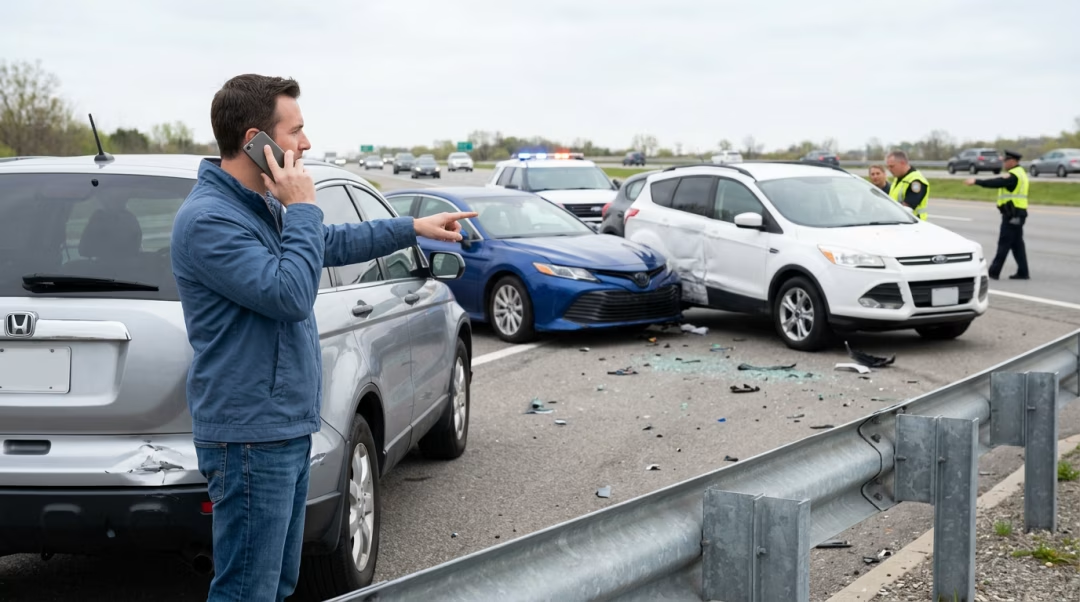
The moments following a multi-car accident are chaotic. Your priority must always be safety. If possible, and only if it is safe to do so, move your vehicle to the shoulder or a nearby safe location to prevent further collisions. Turn on your hazard lights immediately. Check on yourself and your passengers for injuries, then check on the occupants of the other vehicles involved. Call 911 right away, even if the accident seems minor. A police report is an indispensable document in a multi-car claim, as it provides an official, objective account of the incident. When law enforcement arrives, provide a clear and factual statement of what happened, but avoid admitting fault or speculating on the actions of others. Stick to the facts as you know them.
In a multi-vehicle accident, meticulous documentation is not just helpful—it is critical. Your ability to build a strong claim depends on the evidence you collect at the scene. Use your smartphone to take extensive photos and videos from multiple angles. Capture the positions of all vehicles, the damage to each car (including your own), skid marks on the road, traffic signals, and any relevant road conditions. It is also essential to gather the following information from every single driver and passenger involved:
Additionally, if there are any witnesses, ask for their names and contact information. An independent witness statement can be incredibly valuable when insurance companies are trying to determine liability.
Determining fault is the most challenging aspect of a multi-car claim. It is rarely a simple case of one driver being 100% responsible. Often, liability is shared among multiple parties. A common scenario is a chain-reaction rear-end collision, where the last car in the line is typically considered at fault for the initial impact. However, if a middle car was following too closely, it might share some of the liability for the damage to the car in front of it. Insurance adjusters will conduct a thorough investigation, using the police report, driver and witness statements, and physical evidence to piece together the sequence of events. They will consider factors like traffic laws, speed, and driver distraction to assign a percentage of fault to each party involved, a concept known as comparative negligence. This is why knowing how to handle a claim when the other driver is at fault can provide valuable context for these complex situations.
Your first call should always be to your own insurance company, regardless of who you believe is at fault. Report the accident promptly and provide them with all the information you have gathered. Your insurer will open a claim for you and explain the next steps based on your coverage. They will act as your primary advocate throughout the process.
Soon after, you will likely start receiving calls from the insurance companies of the other drivers. It is important to be cautious in these conversations. You are only obligated to provide basic factual information. Decline any requests to give a recorded statement until you have spoken with your own insurance adjuster and feel comfortable with the process. An insurance adjuster's job is to minimize their company's payout, and your words can be used to assign partial fault to you. Stick to the facts and let your insurer handle the negotiations with the other companies. For a deeper dive into this part of the journey, review the details of how the auto body insurance claims process works.
After the claims are filed, the focus shifts to assessing the damage. Each insurance company will want to inspect the vehicles involved. You will need to get a repair estimate from a qualified collision center. It is important to understand how to read a collision repair insurance estimate to ensure all necessary repairs are covered. In some cases, the damage may be so severe that your vehicle is declared a total loss. Understanding what happens if your insurance totals your car is crucial for navigating your options, which might include finding a replacement vehicle from our extensive inventory. A significant collision can also impact your vehicle's market price even after repairs, making it important to look into a what is a diminished value claim after a collision to potentially recover that lost value.
Determining who pays depends on the specific circumstances and state laws. Insurance companies investigate to assign fault to one or more drivers. In "at-fault" states, the insurance of the responsible driver(s) pays for damages. In "no-fault" states, your own insurance typically covers your initial medical expenses, regardless of fault. Property damage is almost always handled by the at-fault party's insurance.
It is best to be cautious. You should report the accident to your own insurer first and let them guide you. While you may need to provide basic facts to other insurance companies, avoid giving recorded statements or admitting any fault. Let your own insurance adjuster handle the detailed communications with other insurers to protect your interests.
If you are found partially at fault, the rules of comparative or contributory negligence in your state will apply. In a comparative negligence system, your settlement amount would be reduced by your percentage of fault. For example, if you are 20% at fault, you can only collect 80% of your damages. Your own collision coverage would still cover your vehicle's repairs, minus your deductible.
The time limit, known as the statute of limitations, varies by state and by the type of claim (property damage vs. personal injury). It is crucial to report the accident to your insurance company immediately. The official deadline to file a lawsuit can be two to three years or more, but delaying your claim can make it much harder to prove and resolve successfully.
If the cost to repair your vehicle exceeds a certain percentage of its actual cash value (ACV), the insurance company will declare it a total loss. The at-fault party's insurance company (or your own, if you have collision coverage) will offer you a settlement equal to the ACV of your vehicle right before the accident occurred, minus any deductible. You can then use this settlement to purchase a new vehicle.