Few things are as frustrating for a vehicle owner as discovering a fresh door ding. Whether from a stray shopping cart, a tight parking spot, or an unknown source, these small imperfections can significantly detract from your car's appearance. Fortunately, modern auto body technology offers sophisticated solutions that go far beyond old-school methods. The primary technique used by professionals today is Paintless Dent Repair, or PDR. This innovative process allows skilled technicians to meticulously massage the metal back to its original form from behind the panel, completely removing the dent without disturbing your vehicle's factory paint finish. Understanding how this process works reveals the incredible skill involved and highlights why professional service is essential for a flawless result. It is a cost effective way to preserve not only your car's look but also its long term value, making it a smart investment for any car owner who takes pride in their ride.
Choosing professional door ding repair is about more than just aesthetics; it is a crucial step in vehicle maintenance. By addressing dings promptly with techniques like PDR, you protect your car's original paint, which is your first line of defense against rust and corrosion. A clean, dent free body also plays a significant role in maintaining your vehicle's resale value. When you decide to value your trade, a pristine exterior can make a substantial difference. Our team of experts is dedicated to restoring your vehicle to its former glory.
The world of auto body repair has evolved dramatically, and nowhere is this more evident than in the art of door ding and minor dent removal. The days of needing to fill, sand, and repaint an entire panel for a small imperfection are often a thing of the past. Let's explore the step by step process and the technologies that make modern door ding repair so effective.
The first and most critical step is a thorough assessment of the damage. Not all dings are created equal. A trained technician will examine several key factors to determine the best course of action. They will analyze the dent's size, depth, and location on the door panel. Sharp creases or dings on a body line or a heavily braced area of the door are more challenging than smooth, round dents in the middle of a panel. The technician will also inspect the paint. If the paint is cracked, chipped, or broken, the repair will require a different approach. The goal of this assessment is to determine if the damage is a good candidate for the preferred method: Paintless Dent Repair (PDR).
Assuming the dent qualifies for PDR, the next phase is gaining access to the backside of the dent. This is where the true skill and experience of a technician come into play. For a door ding, this can often be accomplished by lowering the window and using a window guard to slide specialized tools down into the door cavity. In other cases, they might need to remove interior components like the door trim panel, speakers, or vapor barriers. Every vehicle is constructed differently, so knowing the precise and safest way to access the area without causing any damage to internal wiring or mechanisms is paramount. This careful approach ensures a clean and non invasive repair.
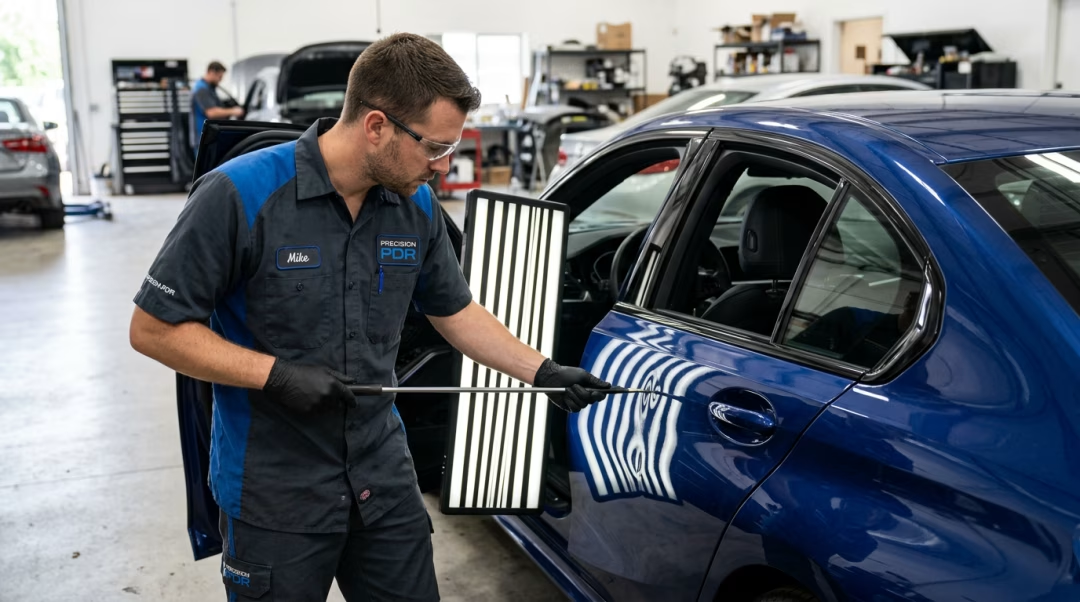
This is the core of the process. With access to the back of the panel, the technician uses a combination of specialized tools and lighting. A special PDR light board, which reflects lines onto the vehicle's surface, is used to get a highly detailed view of the dent's topography. The distorted lines on the board show the technician the exact high and low spots of the imperfection.
Using a variety of long metal rods and picks with different tips, the technician then begins to apply slow, precise pressure to the backside of the dent. They make hundreds of tiny, meticulous pushes, gradually massaging the metal back into its original position. This is not a simple case of just popping the dent out. It is a delicate process of relieving stress in the metal and reshaping it without creating high spots or damaging the paint's integrity. The technician constantly reads the reflection on the light board, adjusting their technique until the reflected lines are perfectly straight again, indicating the panel is flat and the dent is gone. If you want to know more about how PDR works best, you can read our guide on what is Paintless Dent Repair and when it works best.
PDR is a revolutionary technique, but it has its limits. If the initial assessment reveals that the paint is broken, the dent is too deep and has stretched the metal too far, or if the damage is on a thick, inaccessible edge, a more traditional repair method will be required. This typically involves carefully sanding the damaged area, applying a high quality body filler to restore the panel's shape, and then meticulously priming, sanding, and repainting the area. The success of this method hinges on expert color matching. To learn more about this intricate process, see our article on how auto paint color matching technology works. While more invasive, this method ensures a perfect finish for damage that PDR cannot fix.
Choosing a professional service for even minor dings offers significant advantages for your vehicle and your peace of mind.
For more information about our services and policies, please visit the pages below:
For most minor dings and dents, the Paintless Dent Repair (PDR) process is remarkably fast. Many single door dings can be repaired in as little as one to two hours. The exact time depends on the size, depth, and location of the dent, as well as the ease of access to the back of the panel.
While PDR is incredibly versatile, it is not suitable for all types of damage. It works best when the factory paint is intact. If the paint is cracked or broken, or if the dent is extremely sharp and has stretched the metal too far, a traditional repair involving paint and body work will be necessary to achieve a perfect result.
No. Once a dent has been properly removed by a skilled PDR technician, it will not come back. The process involves reshaping the metal to its original position and memory. The repair is permanent and will last for the life of the vehicle, unless a new impact occurs in the same area.
The cost of door ding repair varies based on several factors, including the number of dings, their size and complexity, and the type of vehicle. However, PDR is almost always significantly more affordable than traditional body shop repairs because it saves on labor and materials associated with sanding, filling, and painting.
Typically, no. Since Paintless Dent Repair does not involve repainting or major bodywork, it is considered a cosmetic repair and is not reported to services like CARFAX. This is a major benefit, as it helps preserve your vehicle's clean history and protects its resale value from being negatively impacted.