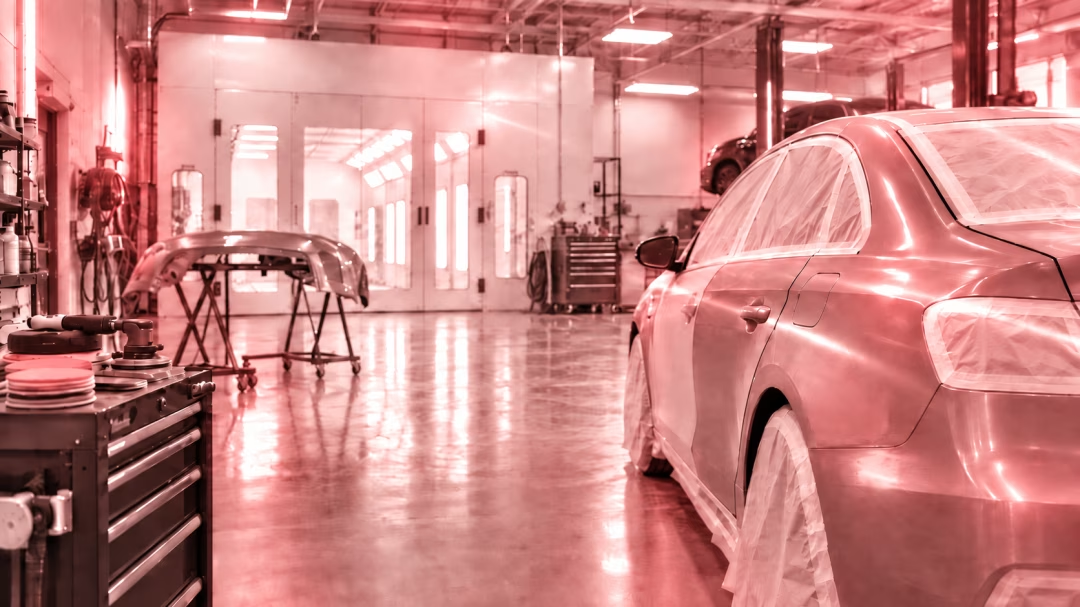
When your vehicle requires repairs across several body panels, achieving a perfect color match is one of the most significant challenges. It is a process that blends advanced technology with skilled artistry, going far beyond simply looking up a factory paint code. The original paint on your car has been exposed to the elements, leading to subtle fading and weathering that a new coat of paint will not replicate on its own. Professional auto body shops understand that factors like panel material, texture, and the angle of light all influence how a color is perceived. An expert technician must account for these variables across every door, fender, and quarter panel to create a truly seamless, invisible repair. This meticulous process ensures that once the work is complete, the repaired areas blend flawlessly with the rest of your vehicle, restoring its original beauty and protecting its value for years to come.
Ultimately, the success of a multi-panel repair hinges on the body shop's ability to master this complex color matching process. By combining computerized analysis with the trained eye of a painter, technicians can create a finish that is virtually indistinguishable from the factory original. This dedication to precision not only restores the vehicle's aesthetic appeal but also ensures the durability and longevity of the repair. It is a testament to the fact that high-quality collision work is as much an art form as it is a science.
Repairing damage that spans multiple body panels presents a unique set of challenges for even the most experienced auto body technicians. Unlike a single-panel repair where the focus is localized, a multi-panel job requires a holistic approach to ensure color consistency across different surfaces, angles, and even materials. A door, a fender, and a bumper cover might all be adjacent, yet they can reflect light differently and require specific techniques for a uniform finish. The goal is not just to paint the new or repaired panels but to make the transition between the original finish and the new paint completely invisible to the naked eye. This process is far more intricate than most vehicle owners realize and involves several critical steps that guarantee a high-quality, lasting result.
Every vehicle leaves the factory with a specific paint code that identifies its exact color formula. This code, usually found on a sticker in the door jamb or under the hood, is the starting point for any paint job. However, it is only a starting point. This code represents the color on the day it was manufactured. Over time, environmental factors cause changes in the paint. To learn more about this initial step, you can read about how auto body shops match factory paint codes. A professional technician uses this code to get the base formula but knows that direct application would likely result in a noticeable mismatch.
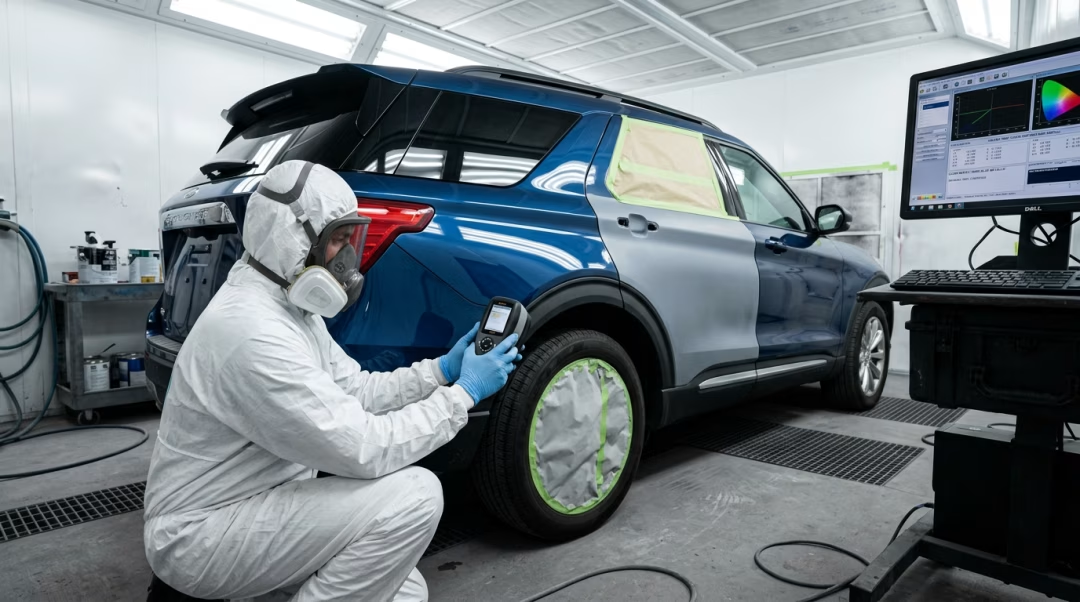
To account for these subtle variations, modern body shops employ a crucial piece of equipment: the spectrophotometer. This handheld device is a digital color-reading camera. A technician places it directly on a panel adjacent to the repair area, and the machine shines a light onto the surface and measures the exact wavelength of the color being reflected back. It analyzes the color from multiple angles to create a digital "fingerprint" of the vehicle's current, weathered paint color. This data is then fed into a computer, which cross-references it with a vast database of paint formulas to find the closest possible variant or create a custom formula. This technology is a game-changer, providing a scientific basis for color mixing that is far more accurate than the human eye alone. The process is explored in depth on our page about how auto paint color matching technology works.
Even with a computer-generated formula, a painter's skill is paramount. The next step is to create a "spray-out card." The technician mixes a small batch of the proposed paint formula and sprays it onto a test card. Once dry, this card is held up against the vehicle under various lighting conditions—from direct sunlight to the fluorescent lights of the shop—to confirm a perfect match. If it is not perfect, the technician will expertly "tint" the formula, adding minuscule amounts of different pigments to adjust the hue until it is exact.
Once the color is perfected, the most critical application technique begins: blending. Instead of painting only the repaired or replaced panels up to their edges, the technician will extend the new paint onto the adjacent original panels. This method, detailed in our guide on what is blending and why painters use it, creates a gradual transition from the new paint to the old. It effectively tricks the eye into not seeing any perceptible difference between the panels, ensuring a flawless, continuous appearance across the entire side of the vehicle.
With the color matched and the blending strategy in place, the paint is applied in a controlled, dust-free paint booth. Several layers of the base coat are applied to achieve full coverage. Following the base coat, the clear coat is applied. This crucial final layer provides the glossy finish and, more importantly, protects the color from UV rays, scratches, and chemicals. The quality of the clear coat and its application are just as important as the color itself for achieving a factory look. You can learn more about its role by visiting our page on what is clear coat and why it protects your paint job. After application, the vehicle is typically baked in the paint booth to properly cure the paint, creating a hard, durable finish that will stand the test of time and maintain its appearance.
This multi-faceted approach is why professional multi-panel color matching is a hallmark of a quality repair shop. It protects your investment and ensures that after a collision, your vehicle's aesthetic integrity is fully restored. A job done right preserves not just the look of your car, but also its resale value, which is a key reason to always seek out certified professionals for collision work. For more information on this, see our article on how collision repair protects your vehicle resale value.
The factory paint code provides the original formula, but it does not account for the aging and weathering process. Sunlight, weather, and road chemicals subtly alter your car's paint over time. A professional shop uses the code as a starting point and then uses a spectrophotometer and test sprays to tint the formula to match your vehicle's current, unique color.
A paint variant refers to the slight differences in color that can occur during the manufacturing process. A single paint code can have dozens of approved variants. A skilled technician uses variant decks (a collection of pre-painted chips) and digital tools to identify the specific variant that was used on your car to ensure the most accurate starting formula.
Yes, that is the primary goal of professional multi-panel color matching. Through a combination of digital color analysis, expert tinting, and the critical technique of blending the new paint onto adjacent panels, a skilled painter can make the transition between the repaired area and the original finish completely invisible under all lighting conditions.
Paint can appear slightly different on various surfaces, such as a metal fender versus a plastic bumper cover. This is due to differences in texture, static charge, and how the materials are primed. Technicians must use specific flex additives and application techniques for plastic parts to ensure the color and texture match the surrounding metal panels perfectly.
On the contrary, a high-quality, professionally executed multi-panel repair will protect and even restore your car's resale value. An invisible repair is far better than visible damage or a poorly matched paint job. Reputable shops provide warranties for their work, giving future buyers confidence in the quality of the repair and maintaining the vehicle's market value.